 |
|

| |||||||
|
|
| |||||||


Quote of the month: “I’m going to die here. They beat me everyday.”
- Ms. Ding Zhenfang to her husband when he visited her in 2010 at Liaoning Women’s Prison where she was held for talking to people about Falun Gong. On August 1, 2011, Ms. Ding died in custody.
HIGHLIGHTS
PHOTO GALLERY
Images smuggled from China in August-September 2011
This photo gallery features 10 photos smuggled from China in August and September 2011 and obtained by the Falun Dafa Information Center. The images, sent abroad via the internet at great risk to the senders, provide a unique first-hand glimpse at both the reality of persecution faced by Falun Gong practitioners and their continued faith despite the repressive environment. The images included range from samples of Mid-Autumn festival greetings sent from China to Falun Gong founder Li Hongzhi, to the entrance sign of a local brainwashing center, to a series of photos of victims and their families taken before they were detained and, in some cases, killed, including one of a 24-year-old woman who died earlier this month.
* FDIC, “Images smuggled from China in August-September 2011”
ANALYSIS
Thousands in China send Mid-Autumn festival greetings to Falun Gong founder Li Hongzhi
Thousands of greeting cards were sent this month via Falun Gong’s Minghui website to the founder of Falun Gong Mr. Li Hongzhi in celebration of the Mid-Autumn festival. The greetings, which typically represent collections of Falun Gong students in a variety of geographic regions, provide insight into the resilience of the Falun Gong community in China, despite over a decade of suppression. The Mid-Autumn Festival is, along with the Chinese Lunar New Year, one of the most important holidays in China and often a time for reunion with friends and family. This year’s Mid-Autumn Festival greetings also included many submissions sent by non-practitioners of Falun Gong, including from current and retired public security personnel, military veterans, journalists, and lawyers. See this bulletin’s photo gallery for samples from Chongqing, Shanghai, and Shandong.
* FDIC, Photo gallery
Jamestown China Brief: “The 610 Office: Policing the Chinese Spirit”
In its September 16 issue, the Jamestown Foundation’s China Brief included an article on the 610 Office, described as a “plainclothes CCP-based extra-ministerial security force focused on suppressing the Falun Gong spiritual group.” The piece, authored by researchers Sarah Cook and Leeshai Lemish, analyzes the 610 Office from the perspective of the CCP’s tradition of arbitrarily creating “leading groups” that operate at the behest of top cadres. The authors argue that the agency is “a CCP-based, rather than a state-based, security organization” that highlights the “revival of the use of security agencies to enforce ideological compliance. Moreover, they say, “the 610 Office signifies a systemic arrangement by CCP leaders to avoid the reach of legal reforms when dealing with a perceived existential threat to their power. The willingness and ability of CCP leaders to take such actions has implications not only for how we understand the trajectory of rule of law development in China, but also for how we might anticipate the regime responding to present and future threats to its security.”
* China Brief, “The 610 Office: Policing the Chinese Spirit.”
DEATHS FROM TORTURE
Six new cases of Falun Gong deaths from torture documented
At least six additional Falun Gong practitioners died from abuse in custody between June and August 2011, according to reports compiled by the Falun Dafa Information Center. Several of the victims died after being released in poor condition from long-term abuse in custody. On the other hand, in one case, a schoolteacher was killed within less than a month from when she was taken into custody. These cases bring to 49 the total number of deaths known to have occurred since January. The following is a list of the known victims, though given the difficulty of obtaining information, the actual death toll is surely higher. A more detailed account of each case is provided at the corresponding link.
• Mr. Guan Zhenyuan, 58, from Gansu, was a father of two who died on June 2, 2011 after 8 years of torture.
• Mr. Pan Benyu from Heilongjiang died on July 17, 2011 as a result of prolonged torture
• Ms. Huang Tao, 55, from Yunnan never recovered from forced labor and died on July 28, 2011
• Ms. Zhuang Shuling, a schoolteacher from Heilongjiang, died on July 30, 2011 only 25 days after being taken into custody.
• Mr. Feng Qi, 48, from Anhui was tortured to the point of disability and passed away on July 31, 2011
• Ms. Ding Zhenfang, 62, a bookstore owner from Liaoning died on August 1, 2011 from nonstop beatings at a women’s prison
TORTURE, DETENTIONS AND OTHER ABUSES
Bo Xilai intensifies Falun Gong crackdown in Chongqing
In recent weeks and months, the persecution of Falun Gong practitioners in Chongqing has intensified under the direction of Chinese Communist Party (CCP) head Bo Xilai. According to information obtained from CCP insiders, Bo apparently seeks to capitalize on the crackdown to advance his political ambitions and show that he is capable of wiping out Falun Gong in his jurisdiction. Bo already has a long track record of directing attacks on Falun Gong practitioners in Liaoning province where he previously served as a top CCP official. Although Falun Gong practitioners in Chongqing have been persecuted since 1999, recent months have witnessed an intensification of the campaign against them with the following features:
Hunan woman sentenced to seven years in prison for reading Falun Gong literature at friend’s home
A court in Hunan province recently ordered that 61-year-old former bank employee Ms. Xiang Huaixiang be sent to a prison camp for seven years because she practices Falun Gong. Ms. Xiang was abducted by security agents on July 19, 2010, while gathering in private with eleven other elderly practitioners to read Falun Gong teachings and share their spiritual understandings. Suddenly, agents from the 610 Office and police raided the home and detained them. Four of the practitioners were released because they were over 80 years old, but others remained in custody. Between November 2010 and April 2011, Ms. Xiang had four sham trials, including one at which a court-appointed lawyer pleaded guilty for her against her will. At the last trial, a judge from Suxian District Court in Chenzhou announced she would be sent to prison for seven years. In 2000, Ms. Xiang’s daughter, Ms. Chen Lijuan was detained for practicing Falun Gong and rendered mentally unstable due to the torture she suffered in custody. She never recovered and died in 2004. She was only in her 20s. For a photo of the elderly Ms. Xiang, see photo gallery.
Brainwashing center opened at Anhui University of Science and Technology
In August 2011, Chinese Communist Party officials and 610 Office agents set up a center for forcibly converting Falun Gong practitioners at the Anhui University of Science and Technology hotel. At least seven Falun Gong practitioners have reportedly been held there over the past month. In one case, Mr. Zhang Jinguo, an employee of Huainan internal revenue service, and his wife were tricked into going to the center on August 4, and held there. In several other cases, practitioners were reportedly taken to the hotel in an ambulance. The center is one of countless such makeshift detention facilities across the country where Falun Gong practitioners are pressured to renounce their belief, often with physical and psychiatric torture. The centers numbers have increased as part of an intensified three-year campaign to “transform” Falun Gong practitioners launched in 2010.
* See photo gallery for photo of outside of the center.
* On the transformation campaign, see FDIC report and analysis from the Congressional-Executive Commission on China
MEDIA AND INTERNET FREEDOM
Urgent Appeal: Elderly woman facing imprisonment for distributing Falun Gong DVDs
A 72-year-old woman from Heilongjiang province could be brought to court for a sham trial and potential imprisonment at any time, simply because she practices Falun Gong and distributed DVDs about it to others. Ms. Zhang Hongyi was abducted by police in March 2011 while she was handing out DVDs related to Falun Gong and human rights abuses at a bus stop in Mudanjiang. Several days later, police raided her home, confiscating books of Falun Gong’s spiritual teachings and two computers. Police attempted to detain her longer term but the detention center refused to accept her because of her advanced age. Since then, Zhang and her children have been repeatedly harassed and called in for questioning. The family recently discovered that on August 12, Gao Lianshun from the procuratorate had sent an indictment to Xi’an District Court, which has accepted the case. Given the CCP’s record of illegally imprisoning Falun Gong practitioners, Zhang and her family fear she could be sent off to a prison camp for years. The Falun Dafa Information Center calls on press freedom groups and democratic governments to raise Ms. Zhang’s case with the Chinese authorities, pressuring them to drop all charges and allow her to exercise her rights to freedom of belief and expression without fear of reprisal.
Indonesia radio station manager sentenced to jail for broadcasts on human rights in China
On September 6, a judge in Batam, Indonesia handed down a six-month jail sentenced to the manager of a radio station that had aired broadcasts about human rights in China, including the persecution of Falun Gong. Gatot Machali, manager of Radio Era Baru, was also fined 50 million rupees ($5,800) and has said he will appeal the decision. Press freedom groups have strongly condemned the trial and sentencing, urging the Indonesian government to resist CCP pressure to silence critical voices within its borders. The entire case has been marred with concerns of selective enforcement and fears that the charges result from Chinese pressure, including a 2007 letter from the Chinese embassy to Indonesia’s Ministry of Foreign Affairs demanding closure of the station and noting Machali by name. Reporters without Borders wrote immediately to the Indonesian President and Minister of Law and Human Rights asking them to intervene on Machali’s behalf. Radio Era Baru is an affiliate of Sound of Hope, a radio network founded by Falun Gong practitioners with the mission of providing uncensored news to Chinese audiences around the world.
* Reporters without borders
* Jakarta Globe
* Freedom House
Video showing cyber attack on Falun Gong removed from state-run TV
After catching the attention of the international community, a video clip that inadvertently admitted Falun Gong websites are a target for military cyber attacks has been removed from state-run China Central Television’s (CCTV) website. Cybersecurity analysts and international media took notice of the clip because it was a rare admission by the CCP that the many cyber attacks originating from China against human rights groups, government departments, and businesses in the United States and Europe indeed have official backing. The clip is still available on the U.S.-based video-sharing website YouTube.
* The Washington Post
* YouTube clip from CCTV program
OUTSIDE CHINA
U.S. Confucius Institutes import discrimination against Falun Gong
Confucius Institutes that are located at U.S. universities are indirectly importing the CCP’s employment discrimination against Falun Gong practitioners, according to a recent investigative report by The Epoch Times. The paper discovered that the hiring policy used to choose which Chinese are sent to teach at such institutes, non-profit cultural centers sponsored by the Chinese government, explicitly cites the following qualifications: “Aged between 22 to 60, physical and mental healthy, no record of participation in Falun Gong and other illegal organizations, and no criminal record.” Disturbingly, when reporters brought this policy to the attention of administrators at 9 U.S. universities hosting Confucius Institutes, the latter expressed little disapproval, asserting instead the CCP’s right to vet institute teachers according to its own criteria, even if those would be illegal in the United States. Other commentators, including legal experts and religious freedom advocates, viewed the hiring practices as unethical and clear religious discrimination. One Canadian pundit took his critique a step further saying, “That would be like if in the 1930s, if we had a German Institute in universities saying you have to be healthy, 22 to 60, and ‘No Jews Allowed.’”
* The Epoch Times
Urgent Appeal: Chinese refugees in Korea facing imminent deportation
A young Chinese couple who practice Falun Gong and live in South Korea are facing imminent deportation back to China, which would put them at risk of illegal imprisonment, torture, and death. On September 6, immigration officials raided the home of Mr. and Mrs. Jin Jingzhe, and detained Mr. Jin, taking him to a protection center for migrants. The couple had applied for asylum and their application was rejected, part of a pattern in South Korea in recent years. Despite being a signatory of the UN Convention against Torture, which forbids deportation of people to a country where they would face torture, the Korean government, under possible pressure from the CCP, has sent 10 Falun Gong practitioners back to China since 2009. In July 2011, three Falun Gong practitioners were repatriated. The Korean Falun Dafa Association has submitted a complaint about the matter to the office of the National Human Rights Commission of Korea and the UN High Commission for Refugees. Roger Helmer, a member of the European Parliament, wrote on September 9 to the South Korean Ambassador in the United Kingdom, voicing his concern for the couple and requesting assurance that Korea would fulfill its international obligations to asylum seekers. According to The Wall Street Journal, at least 23 members of the U.S. congress have also written to the Korean government.
* FDIC
* The Epoch Times
* The Wall Street Journal
Swiss musician dedicates album to Falun Gong persecution victims
Swiss musician and activist Michael de Salem released his debut album “Something Getting Wrong” last month. An avid environmentalist and human rights activist, he has dedicated the album to exposing the suppression Falun Gong practitioners face in China. De Salem was reportedly deeply touched by the story of a Chinese family who lost their lives as a result of the persecution. The song entitled “Higher” on the debut album was written especially for Falun Gong victims in China who have “suffered tremendously for simply wanting to improve their lifestyles and attain higher levels of consciousness.” The album is available for sale in record stores and online shops such as Amazon.
* PRWeb
TAKE ACTION
Petition urges U.S. Senators to co-sponsor Falun Gong Resolution
A new petition launched in early September on Change.org is urging U.S. Senators to co-sponsor Senate Resolution 232. The resolution, introduced on July 13, 2011 by New Jersey Senator Robert Menendez and Oklahoma Senator Tom Coburn, aims to recognize the continued persecution of Falun Gong practitioners in China, call for an immediate end to the campaign against them, and take note of the Tuidang movement whereby Chinese citizens renounce their ties to the Chinese Communist Party and its affiliates. The Falun Dafa Information Center encourages readers to sign the petition or otherwise reach out to Senators during the month of September to urge them to co-sponsor the resolution.
* Change.org petition
* Text of Senate Resolution 232
THE BASICS
Since 1999, the Chinese Communist Party has carried out a widespread, brutal campaign of persecution to eradicate Falun Gong, a traditional Chinese spiritual and qigong practice, whose adherents in China still number in the tens of millions. Hundreds of thousands of Chinese who practice Falun Gong remain in captivity, rendering them the single largest group of prisoners of conscience in China (article). The United Nations, Amnesty International, Chinese human rights lawyers, and Western media have documented Falun Gong torture and deaths at the hands of Chinese officials (reports). In its annual report released in early 2011, Amnesty International stated that Falun Gong practitioners who refused to renounce their beliefs “are typically tortured until they co-operate; many die in detention or shortly after release.” The Communist Party’s campaign and its implementation are in violation of Chinese law and, contrary to common reporting, Falun Gong was not banned as an “evil cult.” (analysis)
Falun Gong FAQ
Persecution FAQ
Key Statistics
Journalist’s Corner
http://faluninfo.net/article/1170/
| 美媒:权贵阶层在中国,吃些什么可是大有来头 |
 打印版 【 阿波罗新闻网2011-09-21讯】
阿波罗网责任编辑:王和 来源:洛杉矶时报 |

自西藏僧人平措為抗議中共對西藏的專制統治自焚喪生後,數百名格爾登寺僧人遭到中共政府拘捕和強行驅逐。
《西藏之聲》9月19日報導,中共當局表示,如果被驅逐出寺的格爾登寺僧人從此還俗不再到寺院,每人可以獲得兩萬元人民幣「獎勵」,另外在三年內可以獲得五萬元人民幣的無息貸款。
而在今年3月之後自動還俗的,則可以獲得一萬元人民幣,三年內可以無息貸款五萬元。但到目前為止,沒有任何一位僧人還俗領取中共的這一「獎勵金」。
「一個國家沒有對佛法的敬重 是可憐可悲的」
僧人會為此還俗嗎?就此問題大紀元記者採訪了四川成都的圓吉法師,他表示,每個人都有他的志願,能儘自己所能去幫助眾生,這是一件快樂的事情。「別說是一萬、兩萬,就是更多的財寶,也只能解決眼前的一點點問題。真正能解決人生的根本問題,只有從慈悲和智慧中尋找。」
「這個一萬、兩萬塊錢算甚麼。就是整個宇宙的財寶,也不會使真正那些僧人動心的。一個國家沒有對佛法的敬重的話,是可憐可悲的。我們能看到後面的結果是甚麼。」
居士曾小玉說:「這件事情聽起來很奇怪,因為信仰不是用金錢來衡量得了的。那裏的喇嘛們都是特別信仰佛教、佛祖的,都是很慈悲的,喇嘛們肯定不會為金錢放棄修佛的信仰。在玉樹大地震的時候,他們首先是去搶救老百姓,而不是去搶救寺院的財產。」
「從佛法來講,阻礙一個人出家的罪過都很大,更何況是去引誘這些出家人還俗道,就像魔道一樣去引誘他們。好不容易走上菩提道,擺脫了六道輪迴了。有句話:寧可動千江水,不可動道人心。」
西藏流亡政府駐台代表達瓦才仁對美國之音表示,他不認為西藏喇嘛會因此而還俗。因為出家或還俗在西藏歷史上一直是很自由的。但中共政府一直都想盡辦法去遏止藏人出家。類似這樣的政策不管是從法律層面或政策層面都有很多,希望藏人還俗。
達瓦才仁還說:「但是我認為,即使有西藏人還俗,但是我肯定絕對不會是因為貪圖那幾萬塊錢獎金而還俗。我認為這種可能性不是沒有,但是非常之少。」
「愛國(黨)主義教育」 不簽字擁護中共就被驅離寺廟
中共政府除了獎勵僧眾還俗外,還在寺院開展「愛國(黨)主義教育」。
中國藏學研究中心宗教所所長鄭堆曾向媒體稱,對僧侶開展這種教育,「一方面是對僧人進行教育,同時也是抵制外國少數分裂分子對僧侶進行滲透。」
據悉,這個「愛國(黨)主義教育」被簡化成了對達賴喇嘛的攻擊;同時還得簽字擁護社會主義制度,擁護共產黨領導,如果不簽字就被趕走。因此,造成很多寺院的僧人被迫離開,或選擇逃亡。
《王力宏文庫》中的一篇文章描述,在佛教中,攻擊宗教領袖是重大罪孽,然而誰要是不那樣寫,下場就將是被驅離寺廟,一些僧侶只好採取變通方法,利用藏文中的「是」和「不是」只差一個點,用難以察覺的筆觸在那四個「是」上加一點,使其變成「不是」,矇混過關。
天網創始人黃琦表示,中共對於法輪功人士、西藏僧人及一些家庭教會成員採用的手段都很相似,就是要強迫放棄信仰。
他說:「我在兩次坐牢期間都碰到過法輪功學員,他們都以真善忍信仰和態度處世。其中一位已70多歲,為了自己的信仰,他們寧願坐牢,也不簽字,不對當局做任何妥協。」
黃琦先生表示,這個信仰自由已經寫入了中國的憲法的條款,人們有權利堅持自己的信仰,任何政治勢力和組織都不能為了自己的一己私利或某個組織的利益而打壓信仰人士。
(責任編輯:謝東延)
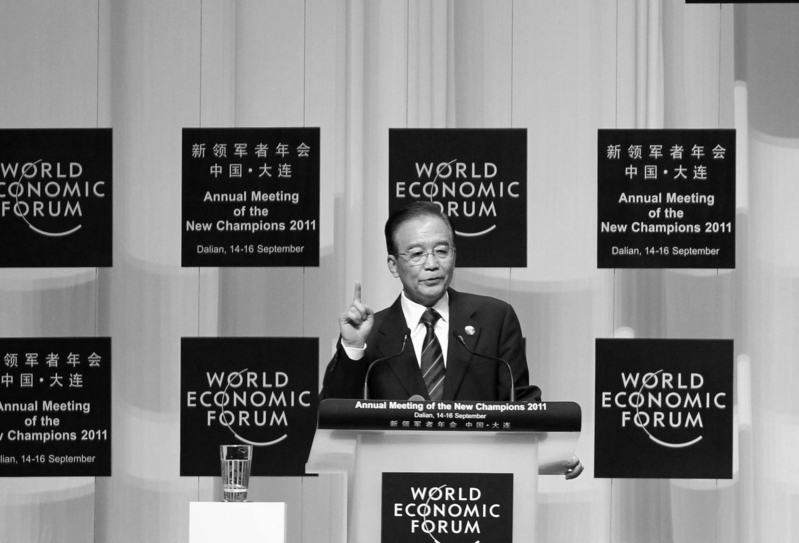
温家宝:中国愿意加大对欧洲的投资
温家宝周三在世界经济论坛(World Economic Forum)表示,中国愿意加大对欧洲的投资,但同时也希望欧洲领导人大胆地从战略上看待中欧关系,比如承认中国完全市场经济地位。他没有就中国准备采取何种对欧洲的具体支持措施或投资措施给出暗示。
中国国家发展和改革委员会周三表示,中国愿意购买欧洲的主权债券。中国《财经》杂志周三引述发改委副主任张晓强的话报导,中国愿意对遇到主权债务危机的国家伸出援手,买一些他们的债券,不过中国更希望把债券转换为投资。他没有暗示政府有无具体计划动用新资金来购买更多欧洲债券。
购买欧债需非常谨慎
美国匹兹堡大学经济学教授达菲(John Duffy)先生,周四对《大纪元》记者表示担心中国购买欧债的做法。他表示,由于欧债违约很可能发生,“目前中国在考虑购买欧洲主权债务、特别是希腊国债时应当特别小心谨慎。”
他分析说:“德国和法国虽然同意让希腊维持在欧元区内,但他们已经同意让希腊债务出现违约了。”
他表示:“虽然希腊曾作出过承诺……但很多人不信任希腊能够成功进行税务和财政开支改革。”
达菲预测说:“希腊违约很快会发生……下周或者下个月,我不确定,但是很短时间内就会发生,很可能在今年就会发生。”
他还表示,希腊违约后,欧洲其他国家也可能步其后尘,出现债务违约。
中共的政治意图
路透社报导,一些分析人士称,有几个中国投资项目,从长期来看可能不仅仅是商业性质的。希腊比雷艾夫斯港和意大利那不勒斯港等大型港口项目令欧洲国家的国防和外交部门的一些人感到担心。那不勒斯港也是北约的主要基地之一。
纽约城市大学政治经济学教授夏明在接受《大纪元》记者采访时表示,中国释放出要购买更多欧洲国债的信息,背后有其政治意图。他解释说:“希腊作为北约的成员国,连接巴尔干一些国家,是中东、西欧国家的一个通道,很多重要的战略活动在那边展开;包括空军、海军等方面的合作,另外也是毒品走私和人口贩卖的巴尔干地区通道。”
夏明还表示:“希腊在地中海有很重要的战略意义,包括在政治、经济和军事上。希腊作为欧共体的国家,所以一旦进入希腊就进入了整个欧盟了,同时它又是北约的一个成员国。”
“对于意大利,情况是类似的。并且,意大利的经济实体和影响力比希腊要大得多。如果中国能够进入意大利的话,那么显然在战略上具有重要的战略意义。”“中共希望通过这种方式打入西方国家,希望他们彼此离间出现各种裂痕,削弱美国(等西方国家)在全球的影响力。”
夏明还说,中国的一些海外投资,实际上国家机构在运作,是政府的主权基金,比如中投等公司,都是政府的“白手套”。
美国南卡莱罗纳大学商学院教授谢田博士,在分析中国表示要加大购买欧洲国债时的真正用意时亦表示:“在2009年的时候,中国曾经购买葡萄牙和爱尔兰的国债,其目的是让这些小国家来游说欧盟承认其经济市场地位。要求放宽军售,以购买欧洲的先进武器,从而希望在台湾、南海、关岛等地构成威胁,达到影响世界和平的目的。”
“欧洲同意中共的交换条件很困难”
夏明说:“基本上,美国和欧洲都不承认中国的完全市场经济地位。”“中国的(经济)市场确实有很多的国家控制(手段),比如补贴、保护市场政策、增加欧洲关税等。欧洲通常采取的是‘反倾销’。”
夏明表示,中国实行“国进民退”的扶持和补贴国营企业的做法,很多产业都存在补贴政策,他进一步举例说,美国加州的太阳能企业倒闭,也是因为(价格上)竞争不过中国,中国政府对企业有大量的补贴和劳动力成本低。据悉,曾被寄予厚望并获联邦5.27亿美元贷款的加州太阳能创业企业Solyndra,8月31日宣布,受来自中国低成本的竞争影响,该公司将停止运营,并申请破产保护。
他认为:“中共采取‘金元外交’的方式,希望获得西方全面承认其完全的市场经济地位,很困难。”
(责任编辑:高静)
http://www.epochtimes.com/gb/11/9/16/n3374330.htm

Beijing-based Caijing magazine cited Zhang Xiaoqiang, vice chairman of China’s National Development and Reform Commission, as saying that China is willing to lend a helping hand to some countries facing sovereign debt risks by buying some of their government debt, but that China has further hopes of turning government debt into tangible investments. He made no further mention of any of China’s concrete plans to buy more European debt.
Professor Xia said China has hidden political intentions when it releases information about buying more Eurobonds.
“Greece plays an important strategic role in the Mediterranean in terms of politics, economics and its military position. As an EU member, Greece offers access to the eurozone, and is also a member of NATO,” Xia said.
“Greece borders some countries whose boundaries lie within the Balkan Peninsula and it offers access to the Middle East and Western Europe. Many activities of great strategic importance, like collaboration between air forces and navy forces, have been launched there. Other than that, human traffickers and drug smugglers can gain access via the Balkan peninsula through Greece and into Europe.”
Xia said Italy is the same, but has even more influence than Greece. “If China has access to Italy, it is of significant strategic importance. The Chinese regime desires to have access to and influence on Western countries, hoping that countries in the eurozone will be estranged from the U.S., further weakening America’s global influence.”
The Chinese regime pays subsidies to support their domestic enterprises, crippling foreign companies, Xia said. He gives as an example the bankruptcy of California’s solar energy companies. Because of price subsidies paid by the Chinese regime and low labor costs, Solyndra could not sustain its operations, and announced bankruptcy on Aug. 31.
Xia added that some of China’s foreign investment is actually controlled by the state. The financial sources are the regime or state-owned companies.
“Although China pursues ‘dollar diplomacy,’ it is still very hard for the regime to have its full market-economy status recognized.”
Follow The Epoch Times’ China feeds on Twitter @EpochTimesChina.

Gary Locke, the U.S. ambassador to China, took a shot at the business climate in the world’s most populous country on Tuesday, by calling on Beijing to dissolve barriers for foreign companies seeking to do business there.
Locke cited the undervalued yuan, expansive government restrictions on the business environment, Internet censorship, and unrestrained piracy and theft of intellectual property as major threats to long-term cooperation between the two nations while slowing down global economic recovery.
Speaking in Beijing at the American Chamber of Commerce to a number of business leaders, Locke said restrictions set up by the Chinese regime are “causing growing frustrations among foreign business and government leaders, including my colleagues in Washington.”
Locke, the former secretary of commerce, praised China’s economy for growing rapidly over the past three decades but said its policies are returning to communist-style state and industrial planning, where the government had an expanded role in overseeing the economy.
Foreign investors face a large number of restrictions in participating in a number of industries in China, including health care, energy, and others, Locke added. He said that a lack of openness between the Untied States and China is sowing “seeds of doubt” among foreign investors as to whether to invest in the country.
“The growth model China has relied on for the last 30 years—one predicated on low-cost exports to the rest of the world and investment in resource-intensive heavy manufacturing—cannot serve it well in the next 30 years,” he said in his second speech as the ambassador to China, a post he took in August.
The European Chamber of Commerce in China earlier this month said the world’s second largest economy still imposes discriminatory laws and rules on businesses in Europe, favoring domestic companies instead. Over the years, a number of foreign businesses have similarly complained of incessant restrictions.
To deal with objections raised by investors, China should allow foreign and local businesses to make investment decisions being interfered with by the regime and do away with practices that require “joint ventures,” he added.
Locke touched on the sensitive issue of regime-mandated Internet censorship, saying the Chinese economy is becoming more and more dependent on citizens’ rights to freely access information. Censorship would negatively impact the Asian country’s ability to compete with other economies.
“If China’s businesses, entrepreneurs, academics, scientists and researchers, students, and even ordinary citizens aren’t able to fully participate in the international marketplace of ideas, then China as a country, and as an economy, will fail to realize its full potential,” he added.
Regarding many economists’ belief that China’s currency is undervalued, Locke urged Beijing to allow the yuan to appreciate at a quicker pace against the U.S. dollar and the currencies of other major trade partners.
Pirating, Locke noted, is a major area where China can improve as only eight cents worth of legal computer software was sold in the country for every $1 of computer hardware. In the United States, 88 cents of legal software is sold for every $1 of hardware.
He noted that around 80 percent of Chinese software is likely pirated.
“I have heard from so many Chinese-owned companies who have devoted significant resources to develop new products and technologies,” he said. “And they complain they were almost wiped out by others illegally copying their ideas and technology.”
Locke is the first American-born Chinese person to serve as the ambassador to Beijing and made headlines in China due to his humble behavior. A photograph emerged showing Locke carrying his own luggage and purchasing his own coffee at a Seattle airport Starbucks before he flew economy class to Beijing.

A Chinese netizen shocked at the expensive timepiece worn by the minister of railways at the site of the Wenzhou train crash has learned a timely trick for seeing which officials are on the take: take a look at the watch on their wrists.
The blogger “Huagoushang General”—or Hua General—recently posted on his microblog a list of watches worn by Chinese Communist Party (CCP) officials, as reported by Hong Kong’s Ming Pao newspaper on Sept. 17.
Based on the officials’ average on-the-books incomes, there is little likelihood that they could afford the custom diamond-embedded Omega Seamaster worth over 200,000 yuan (US$31,331) recently sported by the director of a provincial level department of finance.
Nor is it likely that such officials as Vice Minister of Railways Lu Dongfu, Deputy Minister of Health Yin Li, Vice Minister of Science and Technology Zhang Laiwu could afford the watches Hua General identified on their arms—each worth more than 40,000 yuan (US$6,262).
And an official’s salary certainly couldn’t pay for the Patek Philippe watch worth over 700,000 yuan (US$109,589) that Hua General saw a director wearing during a dinner in Beijing, as reported on the Sept. 16 Qilu Evening News. Patek Philippe is a top end brand often associated with royal families.
When higher ranking officials are present, the watches tend to match the relative ranking, Hua General has found. As reported by Qilu Evening News, Hua General said if a provincial governor wears a timepiece worth 30,000 yuan (US$4,700), then the city governor will wear one worth 20,000 yuan (US$3,100) and county director will wear one worth a few thousand yuan.
In mainland China, civil servants are divided into five ranks and 19 levels, with monthly wages ranging from few hundred yuan to over 10,000 yuan (US$1,566). However, officials of the same rank might have different wages depending on the area they are in.
CCP officials are notorious for their corruption, which allows them to live beyond their incomes.
During May of last year, former Director of Fushun City’s Land Planning Bureau Jiang Runli was charged with corruption. It was found that the 55-year-old Jiang owned six different pieces of real estate, 253 different luxury handbags, 1,246 items of designer clothing, over 600 pieces of jewelry, and 48 luxury watches.
Hua General would not have predicted that he would spend his time providing evidence of official corruption by identifying the watches officials wear.
He claims that he was the former CEO of a joint venture firm, and before starting his own company, he worked closely with officials. Hua General did not think he would end up on the opposite side from them.
Things changed for him as he watched the TV coverage of the aftermath of the Wenzhou train crash. The deadly crash of high-speed trains in Wenzhou City on July 23 has been heavily criticized by Chinese netizens as caused by official corruption.
Hua General accidentally noticed that the Minister of Railways Sheng Guangzu was wearing a Rolex watch that is worth more than 70,000 yuan (USD$10,966). After searching for more images online, he was very shocked.
Hua General found that on different occasions, Sheng Guangzu wore a number of luxury watches, including a Piaget Altiplano, Glashutte Original Senator Automatic, Omega Constellation, and others.
“[I] could only verify the exact model of four watches. They are worth a total of over 400,000 yuan (US$62,622),” Hua General wrote on his blog.
Hua General came by his knowledge of watches naturally. He loved them as a child, and then acquired some professional knowledge as an adult.
His methods of getting the goods on the crooked CCP bosses are very simple. He uses Google image to search for “secretary general,” “director,” and “provincial governor,” then looks for larger images. Many of these images are clear enough to see the watches worn by the officials.
Hua General believes the public has a right to know what watches the officials are wearing, and mainland netizens have agreed. They see Hua General’s efforts as a symbol of the attempts to fight corruption in China.
that Hua General’s microblog along with all of his posts has been deleted, likely due to pressure from the CCP.
Read the original Chinese article.
http://www.theepochtimes.com/n2/china-news/chinese-netizen-watches-officials-watches-61879.html

Since 2009, after a visit from Chinese Communist Party (CCP) propaganda chief Li Changchun, South Korea has sent at least 10 Falun Gong (also known as Falun Dafa) refugees back to China, according to the Falun Dafa Information Center (FDIC). Currently, 56 others have been denied asylum.
The deportations violate the U.N. Convention Against Torture and the U.N. Refugee Convention; South Korea is a signatory of both.
“If he (President Lee) really sends the practitioners back to China to suffer,” said Yahui Jia, a 38-year-old Falun Gong practitioner who escaped from China in 2010, “and the award is going to him today for human rights and democracy, isn’t that ridiculous?”
Jia shared a chilling story of persecution and torture, including not being allowed to eat or go to the bathroom for days at a time.
“An example of brutal torture, especially for females, is they use electric batons to shock the sensitive regions, like the waist area and other areas,” she said through a translator, appearing to barely hold back tears at the haunting memories.
Jia’s daughter was 8 when Jia was first arrested, and “since then, she lost happiness,” becoming sullen, and unlike other children her age.
Falun Gong is a spiritual practice that involves doing meditative exercises and living according to the principles of truthfulness, compassion, and tolerance. Standing, slow-moving exercises were alternated with sitting meditation before and after the press conference on Tuesday, part of a weeklong protest.
According to the FDIC, Falun Gong practitioners are the largest group of prisoners of conscience in the world, numbering in the hundreds of thousands at any time. They have confirmed over 3,300 deaths resulting from persecution.
A Chinese Communist Party (CCP) official with the sports administration indicated early in 1999 that there were 100 million people practicing Falun Gong in China. In July 1999 the Chinese Communist Party began a campaign to “eradicate” the practice.
Practitioners fear President Lee may be under political pressure from the CCP that has been behind similar situations in the past.
“We’re not sure,” said 27-year-old Seog One Ha, a Korean native and current Columbia student. “[But] he should understand that cooperating with such a malicious persecution is [a] bad record that cannot be canceled in the future.”
Asked if he thinks the situation could be changed due to increasing public awareness, such as a Sept. 20 Wall Street Journal article about the deportations, Ha said, “Yes.”
Practitioners have delivered letters of appeal to the Appeal of Conscience Foundation, the South Korean consulates in New York and San Francisco, and all levels of the South Korean government.

Chinese Falun Gong practitioners who want to escape persecution at home are learning that South Korea is not a country where they can seek refuge.
South Korea since 2009 has deported 10 Falun Gong practitioners back to China after courts here refused to grant them refugee status and asylum. Some of them haven’t been heard from since their return to China, according to other Chinese asylum-seekers in South Korea and human rights organizations.
South Korea has denied asylum to more than 40 other Chinese Falun Gong practitioners. It’s unclear whether South Korea has granted refugee status to anyone associated with Falun Gong, a spiritual movement that began in China about 20 years but that alarmed Chinese authorities in the 1990s because of its size and independence from the government. The Chinese leadership officially banned it in 1999 and began to imprison practitioners.
On Sept. 6, Seoul police and South Korean immigration authorities arrested Jin Jingzhe, 26 years old, and his wife Ma Yue. The couple arrived in South Korea from China in 2008. Mr. Jin, who practices Falun Gong, sought asylum but was denied. He’s now being held in a detention center in Suwon and could be deported any day. His wife was freed.
Representatives at the Immigration Department and Justice Ministry said they couldn’t discuss Mr. Jin’s case.
Supporters of Mr. Jin have marshaled letters from human rights groups, 23 members of the U.S. Congress and the vice president of the European Parliament to President Lee Myung-bak urging him to intercede in Mr. Jin’s case. In one such letter, Terri Marsh of the Human Rights Law Foundation in Washington wrote, “It is a certainty that Mr. Jin will be subject to torture if he is returned to China.”
Reached by phone at the Hwaseong Fortress Foreigners’ Detention Center, Mr. Jin said he was fine but declined to discuss the situation. He referred questions to his legal advisor, Oh Se-yeol, who also a spokesman for the Korea Falun Dafa Association, which is the local chapter of the organization.
Mr. Oh said he may ask Justice Minister Kwon Jae-jin to grant a humanitarian stay of the immigration court’s rejection of asylum status.

“At this stage, filing an objection is the only option,” Mr. Oh said. “If it is rejected again, Jin might be repatriated. The possibility would sharply rise.”
He added, “We hope the public will recognize the urgent situation of Falun Gong practitioners and the Korean government will make a humanitarian decision for Falun Gong refugees.”
Several human-rights groups staged a news conference late Monday about Falun Gong in South Korea. They said that, while the asylum hearings and deportations are in line with South Korean law, they may violate the nation’s responsibilities as a signer of United Nations treaties on the status and rights of refugees and the convention against torture.
– Soo-ah Shin contributed to this report.


Image credit:yeowatzup
Beijing fiercely denies it. Much of the world ignores it. But according to analysts and officials, the communist-controlled People’s Republic of China operates the single largest intelligence-gathering apparatus in the world—and its growing appetite for secrets has apparently become insatiable.
From economic and military espionage to keeping tabs on exiled dissidents, China’s global spying operations are rapidly expanding. And, therefore, so is the threat. Some analysts even argue the regime—which is also gobbling up such key natural resources as farmland, energy, and minerals—has an eye on dominating the world.
Estimates on the number of spies and agents employed by the communist state vary widely. According to public statements by French author and investigative journalist Roger Faligot, who has written several books about the regime’s security services, there are around two million Chinese working directly or indirectly for China’s intelligence apparatus.
Other analysts say it would be impossible to count the exact number. ‘I doubt they know themselves,’ says Richard Fisher, a senior fellow on Asian military affairs at the Washington-based International Assessment and Strategy Center. Regardless, the number is undoubtedly extraordinary. ‘China can rightly claim to have the world’s largest, most amorphous, but also most active intelligence sector,’ he says.
That’s partly because it operates very differently from most. ‘When you consider that China’s intelligence community views any foreign-deployed Chinese citizen, any Chinese delegation, all Chinese criminal networks, and all overseas Chinese with any tangible affinity or connection to the Motherland as a target for recruitment, then you have to find a different way to measure,’ Fisher explains. ‘This has to start with the consideration that any Chinese, especially those from China, from student to CEO, are potential active intelligence assets.’
Other analysts echo his concerns, and a simple fact: the regime’s spies are increasingly active across the globe. Since 2008, more and more intelligence-training colleges—‘spy schools’—have been popping up at universities across the country. Meanwhile, Chinese satellite-reconnaissance and cyber espionage capabilities are expanding at an unprecedented speed.
Officials are, probably for good reason, skittish when discussing China and its intelligence collection operations. But there’s near unanimous agreement—and court convictions in countries around the globe support the premise—that, in terms of sophistication, scope, and international capabilities, the perils of Chinese espionage are on the rise.
‘The danger is pronounced,’ warns Charles Viar, chairman of the Washington, D.C.-based Center for Intelligence Studies. ‘In my view, no one is really doing enough to deal with the Chinese threat. It is too large, and by Western standards, too unconventional.’
Among the array of growing dangers associated with Chinese spying: the regime’s increasingly advanced cyber capabilities. While the techniques are used to steal ever more information of all sorts, the potential for devastating offensive operations exists as well. Leaked US diplomatic cables and cyber-security analysts suggest that Chinese military intelligence has been involved in countless network penetrations in recent years. In some instances, evidence suggests that the regime is even able to remotely control sensitive systems.
Consider one example: In 2009, senior US officials reported that cyber spies—at least some of whom were Chinese—infiltrated the US electrical grid. And after breaking in, they left software behind that could be used to cause disruptions or possibly even shut the system down.
The Evolution of the Menace
Though the evolving threats are more advanced and dangerous today than ever before, Chinese espionage is nothing new. In fact, it began centuries ago—well before the communist regime rose to power.
‘China has a history of organized intelligence-gathering operations that goes back to the 15th century—perhaps even earlier,’ says Joseph Fitsanakis, a senior editor with Intel News who teaches classes on espionage, intelligence, and covert action at King College’s Department of History and Political Science. The Chinese, however, took it to a new level.
Up until two to three decades ago, the regime’s spying was largely domestic in nature, Fitsanakis explains—primarily targeting perceived enemies and dissidents within China. But in the post-1980s era, with economic reforms and growing affluence pacifying much of the internal unrest, Chinese intelligence collection efforts began to focus more on the outside world.
Today, according to experts and former counterintelligence officials, Chinese spying represents one of the largest threats to US security. And the sheer size of the regime’s espionage apparatus ‘is proving a good match for the more advanced automated systems used by its less populous regional rivals, including Taiwan, South Korea, and Japan,’ adds Fitsanakis.
Public awareness of the hidden menace is indeed on the rise. But available evidence indicates that the danger is still underestimated—and growing quickly.
‘The Chinese are the biggest problem we have with respect to the level of effort that they’re devoting against us versus the level of attention we are giving to them,’ former US counterintelligence chief Michelle Van Cleave told CBS during an interview. Officials with the US Immigration and Customs Enforcement (ICE), meanwhile, labelled China’s ‘aggressive and wide-ranging espionage’ the ‘leading threat to US technology.’
According to former Chinese intelligence officials who defected to the West, the United States is indeed China’s main target for espionage. But as China steps up its spying around the world, it’s becoming clear that no nation, company, military, or exiled dissident is immune.
Espionage & Influence
Like the intelligence services of most large and powerful countries, a significant segment of China’s spying apparatus is devoted to collecting information on foreign governments—particularly in terms of their military and political systems. Vast numbers of Chinese spies have been caught stealing such secrets.
In fact, it’s known that the regime has already acquired some of the United States’ most sensitive secrets. A US Congressional Committee and then-Director of National Intelligence George Tenet found as early as the late-1990s that China had even obtained information on the United States’ most advanced nuclear weapons.
That’s not all. ‘China has managed to gather a great deal of information on US stealth technology, naval propulsion systems, electronic warfare systems, and nuclear weapons through espionage,’ says Larry Wortzel, a commissioner and former chairman on the US-China Economic and Security Review Commission, and the ex-director of the US Army War College’s Strategic Studies Institute. ‘That is documented in convictions in US courts.’
The regime, however, wants more. A few Chinese espionage cases have made headlines recently, such as the scandal involving former weapons analyst Gregg Bergersen with the US Defense Security Cooperation Agency. A leaked video of him selling sensitive information about US military collaboration with Taiwan—a nation which the communist regime considers a breakaway territory—sparked a new level of public interest in Chinese espionage just last year.
But most cases barely cause a stir. According to an analysis of US Justice Department records by the Associated Press, there have been at least 58 defendants charged in federal court for China-related espionage since 2008. Most have been convicted, while the rest are awaiting trial or on the run. Hundreds of investigations are ongoing.
A leaked diplomatic cable from the US embassy in Santiago, Chile, also revealed that US officials were worried about Chinese espionage against the US military even in Latin America. ‘There’s concern that the Chinese could be using Chilean officers and access to the Army training school to learn more about joint programs, priorities, and techniques that the Chileans have developed with their US counterparts,’ noted the 2005 cable signed by then-Ambassador Craig Kelly, adding that even Chinese journalists were ‘assumed’ to be involved in some kind of collection activity.
‘(A)s the (US government) augments its support to the Chilean Armed Forces, Chinese interest in USG activities in the Southern Cone will most assuredly increase,’ according to the document released earlier this year by WikiLeaks. ‘The Chinese will likely attempt to learn more about US military strategies and techniques via Chilean participation in bilateral training programs and joint exercises.’
And while experts agree that the United States is the single most important target, Chinese agents involved in military and political espionage have been convicted all over the world. In late July, for example, Taiwanese General Lo Hsien-che was sentenced to life in prison for handing over military secrets to Beijing. The case shocked the nation. But it wasn’t necessarily surprising to some observers.
‘Anyone who has followed developments in Taiwan over the years knows how deeply Chinese forces have infiltrated Taiwan’s military, especially its senior officers,’ noted Taiwan-based journalist and security analyst J. Michael Cole in a recent opinion piece for the Wall Street Journal. He noted that, because Taiwan is so infested with Chinese spies, any US weapons sales to the nation could result in sensitive military secrets ending up in Beijing.
Europe isn’t immune either. In Belgium, headquarters of NATO and the European Union, the Minister of Justice and the Minister of Foreign Affairs separately accused China of cyber spying and attempting to compromise critical government networks in 2008. The next year, reports of Chinese intelligence efforts directed at top Australian officials, including the prime minister, made headlines worldwide.
Even in Russia, widely considered at least a tenuous ally of the Chinese regime, Chinese spies have been convicted in recent years. One man, Igor Reshetin, was found guilty of providing information useful in designing nuclear missiles to a Chinese state-owned firm. In early September, Russian prosecutors charged two more academics with selling military secrets to China.
Aside from stealing political and military information, another important goal of Chinese intelligence agents is to gain influence among members of a target country’s political elite. According to experts, China uses bribes, blackmail, women, lavish vacations in China, and other means to compromise officials worldwide.
Even former US President Bill Clinton was widely accused of being too close to Beijing for comfort. ‘President Clinton promised to restrain those who ordered the Tiananmen Square massacre, but he has now allowed these men whose hands are stained with the blood of martyrs of freedom into the highest reaches of our military defences, and made available to them significant portions of our advanced military technology,’ charged former US Joint Chiefs of Staff Chairman Admiral Thomas Moorer in a letter to congressional leaders.
Indeed, one of the prime targets of Chinese intelligence, according to analysts, is information to create comprehensive databases on current and future leaders of free countries. ‘They want to arm their diplomats and businessmen with the inside scoop to be able to expand their political and economic allies to help foster ruling elites that will never challenge the legitimacy of the Chinese Communist regime,’ says Fisher.
In Canada, the issue was raised just last year. During a TV interview, Canadian Security Intelligence Service (CSIS) Director Richard Fadden suggested that some politicians in Canada were connected to certain foreign governments—almost universally assumed to mean China.
After causing an uproar among some sectors, however, the Canadian spy chief tried to downplay the remarks. ‘He was very rapidly shut down by some irresponsible—almost suspicious’—officials, who denied that there was any problem, says Michel Juneau-Katsuya, the former Asia-Pacific head of CSIS.
‘Actually, Mr. Fadden was talking about something that has been happening for decades,’ Juneau-Katsuya says. The strategy of gaining influence among foreign power brokers is an important tool in China’s espionage arsenal, he says. It’s also one that is rarely discussed.
Theft of Trade Secrets
The theft of trade secrets, technology, and corporate information is another one of China’s specialties. ‘When it comes to economic espionage, China is universally recognized as at the top,’ says Juneau-Katsuya, who now serves as the CEO of security consulting firm The Northgate Group. ‘What we know is that, by far, they are at the top when it comes to stealing information.’
Oftentimes the line between military and economic espionage is blurry. The case of engineer Dongfan ‘Greg’ Chung, sentenced last year, is just one example among many. Chung was caught passing sensitive US aerospace and rocket secrets to China that he stole while working for defence contractors Boeing and Rockwell International.
In other cases, the foreign technology stolen by Chinese spies is used to further oppress the population. A revealing lawsuit filed by US software maker Cybersitter, seeking more than $2 billion in damages, accused China and other conspirators of stealing its proprietary filtering code. The software was then apparently used to help censor the web in China.
‘They have a multitude of goals all at once: To catch up on the difference in technology, to gain influence around the world, to know more about where the competition is, and definitely to not have to pay for research and development,’ says Juneau-Katsuya. The R&D element is key.
Often, the motivation for stealing trade secrets is purely economic. In addition to saving unfathomable amounts of time and capital, using stolen information crucial to a company’s survival can actually lead to shutting down China’s foreign competition.
So, partly because the return on investment from spying is so much greater than from R&D, experts say the budgets of Chinese intelligence agencies have soared in recent years. That trend is expected to continue indefinitely.
But while it may be cost effective for China, the price tag paid by others is massive. Precise figures are, of course, impossible to calculate. But in 1995, when Juneau-Katsuya was at CSIS, he tried to get an estimate: It was somewhere in the neighbourhood of $10 billion to $12 billion per year. Since then the problem has only grown.
In Germany, the cost is high, too, Berthold Stoppelkamp of the German Association for Security in Industry and Commerce (ASW) told the press in 2009. He estimated the damages from economic espionage—primarily Russian and Chinese—at around €20 billion every year. But it could be closer to €50 billion, he noted.
An estimate on the cost of economic espionage to the US economy was offered by FBI Director Robert Mueller in 2003: over $250 billion per year. And counterintelligence officials with the Bureau and other experts agree that China is by far the most serious threat.
‘This espionage saps US companies of their industrial lead in the new technologies and materials,’ notes Wortzel. ‘And often the Chinese incorporate what they have learned into new weapon systems that can be used against the US, its allies, and friends.’
And because the threat is continually evolving and comes from multiple directions, it’s difficult to deal with, experts say. China uses all known means of stealing information even as it develops ever more ingenious schemes.
Traditional methods, such as infiltrating companies and compromising existing employees, are still widely used. Academic and educational institutions play a crucial role as well—as do the regime’s ‘front companies’ set up in the United States, estimated to number in the thousands by the FBI. Foreign companies with operations in China are said to be particularly vulnerable to losing their secrets.
Meanwhile, more advanced tools like computer hacking are becoming an increasingly important weapon in the regime’s economic-spying arsenal. ‘Their cyber activities have increased in the last ten years quite significantly,’ says Juneau-Katsuya. ‘They are devoting university departments and entire sections of the (People’s Liberation Army) just to that.’
Another key but underestimated strategy employed in China’s quest for trade secrets—corporate acquisitions and joint ventures—makes use of the regime’s vast empire of well-funded, state-owned companies. By purchasing even a significant percentage of a firm, China often obtains important technological know-how. It also buys political influence.
‘China continues to leverage foreign investments, commercial joint ventures, academic exchanges, the experience of repatriated Chinese students and researchers, and state-sponsored industrial/technical espionage to increase the level of technologies and expertise available to support military research, development, and acquisition,’ notes a 2011 US Defense Department report to Congress on Chinese military and security developments.
Especially following the recent recession, the Chinese regime has been on a global shopping spree using its vast cash reserves—buying up all sorts of companies, from car manufacturers to technology enterprises. But countless examples of the use of this tactic have been documented for well over a decade.
Even more alarming for some: A secret 1997 investigation by CSIS and the Royal Canadian Mounted Police entitled ‘Sidewinder’ found that criminal networks affiliated with Chinese intelligence were also intimately involved. The Canadian government essentially dismissed the report, but many analysts believe the collaboration has only grown since then.
In general, firms and universities are simply not doing enough to protect their secrets and technology from China, says Center for Intelligence Studies Chairman Charles Viar. ‘That said, the larger problem involves contractual agreements in which Western companies voluntarily transfer sensitive technologies—often illegally—in order to win contracts with China,’ he points out.
Fisher has similar concerns. He says firms and educational institutions around the world are not simply targets—in many cases they have become ‘compliant victims’ of Chinese intelligence agencies’ designs.
‘Companies and universities must first reach an understanding of how they are aiding and abetting the Chinese Communist dictatorship,’ says Fisher, noting that as long as they crave Chinese money, they will continue bending over backwards to satisfy the regime. ‘This scandal is compounded by the fact that Chinese allies in the capitals of most democracies are succeeding in avoiding or averting the level of critical review that would also lead to defensive action.’
Persecuting Dissidents, Even Abroad
One of the top priorities of Chinese espionage efforts—foreign and domestic—is monitoring and disrupting dissidents, according to defectors, experts, and official documents. In the crosshairs overseas are Chinese democracy activists, Tibetans, the exiled Uighur community, Falun Gong practitioners, supporters of Taiwanese independence, and countless others—essentially anybody who disagrees with the regime or paints a negative image of it abroad.
In 2009, for example, a massive and sophisticated cyber espionage network was discovered by Canadian researchers. The system, known as ‘GhostNet,’ had reportedly penetrated computers belonging to multiple governments, the exiled Dalai Lama, and a number of other dissidents and critics. Investigators traced the operation to China.
Last year, after a ‘highly sophisticated and targeted attack’ originating in China, Google announced that a primary goal of the operation was to gain access to Chinese human rights activists’ e-mail accounts. ‘Dozens’ of such accounts had already been compromised through other means before the attack in question, the company also said in a statement.
It’s not just human rights campaigners and pro-Tibetan activists who are under constant attack, however. Among the most viciously persecuted are individuals associated with Falun Gong, also known as Falun Dafa. The spiritual and philosophical movement was banned by the Communist regime in 1999 after officialdom decided it might represent a threat to the Communist Party.
Labelling it an ‘evil cult,’ China then created an extra-legal apparatus known as the 6-10 Office to quash the discipline domestically—and around the world. An unprecedented campaign of terror and brainwashing has since been unleashed, including a vast network of ‘re-education’ camps, disappearances, torture, harvesting organs from practitioners, and more.
And the regime’s tentacles have truly spread worldwide in pursuit of its goal. ‘The war against Falun Gong is one of the main tasks of the Chinese mission overseas,’ Chen Yonglin, a senior official at the Chinese Consulate in Sydney told a US Congressional committee in 2005 after his defection.
A vast body of evidence, and even recent court cases, support the claim. In June, for example, a Chinese man in Germany was convicted of spying on members of the Falun Gong community for China. A few years earlier, a senior Chinese embassy official in Ottawa was expelled after being caught spying on practitioners there.
In the United States, officials also regularly highlight the problem. The House of Representatives has blasted the regime for similar illegal activities inside the United States on at least four occasions. A House resolution passed last year and a separate measure adopted in 2004, for instance, recognized the seriousness of the problem, called for the regime to stop, and urged US authorities to take action.
According to the resolutions, China’s diplomatic corps is actively ‘harassing and persecuting’ Chinese dissidents in the United States, breaking into the homes of prominent activists, pressuring US officials with threats, spreading lies, and more. In addition to the well-known persecution going on within China, ‘the Chinese Government has also attempted to silence the Falun Gong movement and Chinese pro-democracy groups inside the United States,’ the measures state.
More than a few US Representatives have been even more direct. Foreign Affairs Committee Chair Ileana Ros-Lehtinen (R-FL), speaking in support of the resolution, said last year that ‘clear evidence’ shows Chinese diplomats were colluding with secret agents and ‘thugs’ to suppress the constitutionally protected rights of Americans. She called on the State Department to ‘get tough’ on the regime’s functionaries within US borders.
‘First is the issue of the penetration of agents of an alien Communist regime right here inside the United States to wage a campaign of repression against US citizens,’ Ros-Lehtinen said before the House, citing examples and noting that Chinese agents were ‘persecuting American Falun Gong practitioners in our own country.’ And the well-documented ‘bloody harvest’ and ‘coercive organ transplants’ from Falun Gong practitioners within China, she added, ‘is almost too ghoulish to imagine.’
One prominent analyst on the issue of Falun Gong persecution, David Kilgour, is a former Canadian member of parliament and served as Canada’s secretary of state for Asia-Pacific in 2002 and 2003. He recently co-authored a book entitled ‘Bloody Harvest—The killing of Falun Gong for their organs,’ which closely examines the brutality and takes a look at the regime’s illegal persecution of exiled practitioners.
‘The espionage and intimidation the party-state deploys against Falun Gong abroad is outrageous,’ Kilgour says, calling it an extension of the ‘very severe persecution’ in China. ‘It’s unconscionable for a repressive government to use the freedom of a democracy to project abroad its persecution of its chosen victims.’
Among the examples he cites is a 2003 case in which two Chinese diplomatic officials in Edmonton were caught handing out pamphlets inciting hatred against the Falun Gong—a crime in Canada. But there’s much more, he says.
Chinese defectors have told Kilgour that the effort spent monitoring and repressing dissidents overseas actually outweighs all other functions of Chinese diplomatic missions combined, he says. Apparently the regime doesn’t want the international community to realize what has been perpetrated in China.
One victim of that persecution, author and human rights activist Jennifer Zeng, fled China in 2001 after being tortured at one of the regime’s ‘Re-Education-Through-Labour’ camps. ‘The PRC espionage and intimidation against FG practitioners overseas is so common that many of us have become accustomed to it,’ she says.
But while Falun Gong practitioners may be at the top of the regime’s list of perceived enemies, they are far from the only victims of anti-dissident Chinese operations abroad. Another extensively targeted group is the exiled Uighur community, an ethnic minority—primarily Muslim—that has been systematically oppressed within China for decades. China has also been very active in tracking and disrupting the activities of those who managed to flee.
Last year, for example, a man was convicted of ‘aggravated illegal espionage’ against the Uighur refugee community in Sweden. ‘He reported all he could about them,’ says Sweden’s chief national security prosecutor Tomas Lindstram, who prosecuted the case. The information included everything from the targets’ political views and activities to details about their health and travel habits.
Using a ‘rather tricky’ method to communicate with his handlers—a Chinese ‘journalist’ and a diplomatic official—the convicted spy ‘fooled most of his fellow countrymen,’ says Lindstram. The court and the prosecutor recognized the seriousness of the crime—especially because it was to benefit a ‘totalitarian’ government that does not respect human rights. Incredibly, however, the spy was sentenced to less than two years.
Lindstram admits he thought the short sentence was ‘odd’ and didn’t correctly account for the severity of the crime. The government is now apparently looking into the sentencing length question. But for many Uighur activists, the penalty was almost an outrage.
‘There should be a tougher punishment for a crime like this in order to send a strong signal to other possible spies around the world,’ says Mehmet Tohti, the Special Representative of the World Uighur Congress to the European Union. And it isn’t just Sweden that could use improvement.
Tohti says the West in general isn’t doing enough to protect and support exiled Chinese dissidents—even though it is in the free world’s own interest to do so. In Germany, for example, there have also been several incidents of Chinese espionage against Uighurs in recent years. Little has been done.
‘Chinese spying is a big problem for the Uighur community—especially for Uighur organizational leaders,’ says Tohti. But they are hardly alone.
Other victims of Chinese intimidation, wiretapping, and e-mail theft—Tibetan activists and pro-democracy advocates, for example—are fiercely persecuted by the regime outside of China, too. According to Tohti, one of the goals is to minimize the impact of anti-China protests because they are ‘exposing China’s gross and systematic violation of human rights’ to the world.
Beyond Intelligence: Offensive Capabilities
Chinese intelligence agencies are clearly involved in collecting information on a massive scale. Some analysts even refer to the regime’s strategy as the ‘Vacuum Cleaner’ approach. But intelligence gathering is only one piece of the puzzle.
Perhaps even more alarming than monitoring dissidents and stealing trade secrets, analysts say, is mounting evidence of the regime’s increasing ability and willingness to employ its spy services offensively. The number of examples is growing rapidly.
In the cyber realm, China’s use of offensive tactics was highlighted again just last month. As The Diplomat reported on August 25, a video on cyber warfare broadcast over China’s military state TV channel included a brief segment that raised eyebrows worldwide.
The footage apparently showed an old computer programme from the People’s Liberation Army Electronic Engineering Institute being used to ‘attack’ a US-based website tied to the Falun Gong via a US university’s network. And, while the short clip featured outdated and unsophisticated methodology, analysts say it was important for several reasons—providing more evidence of China’s offensive cyber activities being chief among them.
A 2009 report prepared for the US-China Economic and Security Review Commission on China’s cyber capabilities also suggests that the regime’s information-warfare strategy features offensive operations prominently. According to the authors’ analysis of the regime’s strategy, the tools ‘will be widely employed in the earliest phases of a conflict, and possibly pre-emptively.’
The study also notes that faculty members at China’s National University of Defense Technology ‘are actively engaged in research on offensive network operations techniques or exploits.’ Research and development on ‘a variety of offensive information warfare technologies’ is also being conducted by institutes overseen by the PLA’s General Staff Department Fourth Department.
Another area of concern is covert Chinese activism overseas. ‘Their objectives know no limit,’ says Fisher. ‘If China has targeted a country for its resources and has decided to sustain a noisome regime to defend those interests, it will give that regime the means to, as it will also collect a comprehensive data base to help that regime to avoid threats.’
This strategy—secretly propping up friendly dictators—was illustrated recently when China was apparently caught quietly arming Gaddafi after the civil war in Libya began. In violation of international sanctions, China was reportedly offering weapons to the Libyan dictator even in the final weeks of battle, documents leaked in early September indicate.
The move—a carefully calculated risk, to be sure—clearly required intimate knowledge of potential US and NATO reactions. ‘This kind of very targeted power projection will become the order of the day when China builds its power projection Navy and Air Force, due to come online by the early 2020s,’ Fisher warns.
And even though Gaddafi’s regime may have crumbled, he notes, China has a growing international network of support, including the regimes ruling North Korea, Pakistan, Iran, Cuba, Venezuela, and Zimbabwe. Other key players in the Chinese intelligence community’s expanding network of friends are global criminal organizations and freelance cyber warriors—or ‘sub-contractors’ and ‘pirates,’ as Fisher refers to them.
Links with organized crime and so-called ‘Patriotic hackers’ allow the regime some degree of plausible deniability in covert operations and cyber attacks. But between backing socialist strongmen, penetrating critical infrastructure, and sabotaging computer systems, China’s aggressive foreign intelligence operations are increasingly arousing suspicion worldwide.
According to Juneau-Katsuya, the overall designs aren’t all that complex. ‘If you want to understand the strategy that Chinese intelligence and the Chinese government are using, you’ve got to refer yourself to the game of Go,’ he says, noting that it is popular among China’s military top brass.
The ancient game is fairly simple: The object is to encircle one’s opponent and take control of the most territory. ‘That’s exactly the strategy they’re using,’ Juneau-Katsuya says, citing the regime’s increasingly active presence around the world—particularly in Africa—as an example of the plan in action.
Guarding against the Threat
There’s some disagreement among experts about whether governments are doing enough to protect themselves and their people from the threat of Chinese espionage. But overwhelmingly, insiders say nations from Canada and Australia to European states and India need to do more—much more. Small countries in the vicinity of China are probably among the most vulnerable.
Regardless, what is certain, according to analysts, is that most companies and institutions aren’t keeping up with the Chinese regime’s rapidly evolving espionage capabilities. And the PRC is taking full advantage of the opportunities.
‘They understand very well that the Western world is sleeping at the switch when it comes to all this, and the majority of people are not paying attention to the security of their systems,’ says Juneau-Katsuya. ‘That is the weakest link.’
FBI spokesman Bill Carter says that after terrorism, counterintelligence ‘is the number two priority in the FBI, and significant resources are devoted to our counterespionage activities.’ The exact figures are classified, he adds. ‘You don’t like to tell the opposition what your capabilities are.’
The US Department of Justice didn’t respond to requests for comment. Neither did Japan’s Public Security Intelligence Agency. But reports do suggest that at least some governments are getting serious about counterintelligence and the threat of Chinese espionage.
Many more governments, for example, have recently started to take action against state-owned Chinese firms attempting to buy up sensitive or strategic companies. And growing concerns about using Chinese technology—especially in the realm of telecommunications—have been expressed by officials around the world.
By raising public awareness of their plight, the fears of exiled dissidents are being taken more seriously, too. The victims of the Communist regime’s foreign persecution, however, still say much more needs to be done.
Strategies to deal with the threat proposed by analysts interviewed by The Diplomat varied widely, from restricting the number of Chinese nationals allowed into other countries to developing new multilateral institutions to address the problem. More resources dedicated to counterintelligence, tougher punishments for convicted spies, better encryption systems, and more private sector involvement were also all mentioned.
But one point in particular was repeated over and over again. By far the most crucial element in the battle, analysts say, is greater awareness.
Alex Newman is a freelance writer and correspondent for The New American magazine


Recent Comments