| 朱镕基为江泽民哭晕过去 |
| ——江家帮上海掏空国库 朱镕基自责在沪痛哭晕厥 |
|

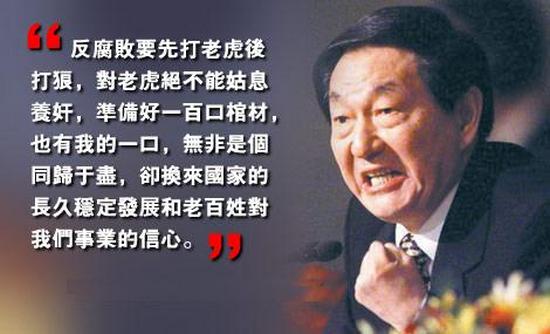
| 朱镕基为江泽民哭晕过去 |
| ——江家帮上海掏空国库 朱镕基自责在沪痛哭晕厥 |
|

80年前的今天,日军以中国军队炸毁日本修筑的南满铁路为藉口,占领中国东北的辽宁省会沈阳,是为918国难。随后数月占领东北三省,建立伪满州国。事隔80年,尽管大陆不少地方举办了抗日纪念活动,但中共领导人没人出席任何悼念仪式,中国保钓人士欲到东北悼念亦受阻挠,而《人民日报》的社论仍然大篇幅赞扬中共的“功绩”,欺骗民众。
中共官方依旧欺世盗名
80年过去了,《人民日报》2011年9月18日的社论《勿忘国耻 共襄复兴 – 纪念九一八事变80周年》依旧大篇幅赞扬中共在十四年抗日战争中从未真实存在过的功绩,只有一句提及1949年迁往台湾的国民党,继续欺世盗名。
80年后,中共仍然在《人民日报》的社论中拿所谓的后方战场欺骗民众。掩盖中共借国难发展自己的军队的真相。整个抗战时期,中共的兵力飞快地从抗战之初的3万人发展到1938年的20万人、1939年的50万人、到抗战结束时更是达到正规军120万、地方部队和民兵200多万,与国府兵力已相差无几。(参见【历史今日】918日本侵华 中共藉国难壮大)
阻挠民间纪念918
由于担心民间情绪爆发,中共一向对抗日纪念和保钓行动严加规控。反日团体的活跃人士近日都受到中共当局的滋扰和警告。北京的中国民间保钓联合会成员张立昆表示,他已被禁出门,电话也受到干扰,与其他成员失去联络。
苹果日报报导,早在上月初,曾在黑龙江省方正县砸破“日本开拓团民亡者名录墙”的五名网民、湖南长沙的湘军五百、以及中国民间保钓联合会等多个反日民间组织,在网上发起穿黑衣黑裤,于本月17日到北京卢沟桥集会哀悼抗日死难者、18日赴沈阳九一八历史博物馆参观及纪念等活动。但这消息在网络发布后,政府的网路管理部门很快就把相关讯息删除。
蒋介石领导国军抗战
蒋介石和国民政府为了民族大局,做出了巨大的牺牲。在抗战之初,蒋介石就在庐山发表演说,要求“地无分南北,人无分老幼,皆有守土抗战之责任”,鼓舞人心,气壮山河。在抗战最危险的1942年,蒋介石再次向全国的有志青年发出了“一寸山河一寸血,十万青年十万军”的号召。很多青年踊跃参军,以这些青年为基础,蒋介石组建了著名的国军“五大主力”——第五军、十八军、七十四军、新一军、新六军。这些部队成为国军最具战斗力的作战部队。成为中华民族在最艰难的岁月里最可靠的顶梁柱。
抗战期间在大后方流行的一首民谣很能说明当时的中国民众对蒋介石的感恩心理。民谣唱道:
打起螺号敲起鼓,
咱们的蒋委员长调队伍,
人强马壮真威武,
要打败日本鬼子收国土。
桃呀桃子花,
李呀李子花,
抗日的领袖人人都爱他!
… …
国军抗战胜利 中国站起来
抗战之前,中国饱受列强的欺凌,国家毫无国际地位可言。国军抗日为世界反法西斯战争做出了突出贡献,也为中国赢得了世界各国包括西方列强的尊敬。经过交涉,中国废除了列强在中国的治外法权,收回了全部“租借地”。蒋介石代表中国出席“开罗会议”,与罗斯福、丘吉尔平等协商。中国也成为联合国的四个主要创始国之一,在《联合国宪章》中,中国的国名列在美、苏两大强国之后,英、法等老牌强国之前。中国成为安理会五个常任理事国之一。蒋介石本人也被国际舆论列为与罗斯福、斯大林、丘吉尔齐名的二战盟国四大伟人之一。这一切都说明中国在抗战结束时已经改变了之前积贫积弱、饱受欺凌的世界地位,站立于世界民族之林。
中共贪天之功,把属于蒋介石和国军的历史功业硬记在自己身上,到今天还在欺世盗名。更多史料,请看 《还原蒋介石》。
(责任编辑:贝利)
《快乐女声》惊传将成“绝响”
《快乐女声》的前身是《超级女声》,由湖南卫视于2004年创办,至今已举办了多届,发掘出多名新世代歌手,例如李宇春、周笔畅、张靓颖等。每届都吸引无数年轻男女观看、猜想、参与评论,是近年极为成功的综艺节目。
该节目今年7月15日首次通过卫星转播,向全国播放。每周一场,前晚(9月16日)举办总决赛,在选出前三名后,湖南卫视发言人李浩突向媒体证实,因为节目超时,湖南卫视日前接到广电总局通知,湖南卫视明年不得再举办民众参与的选拔类电视活动,李浩并说:“电视台方面会服从广电总局的决定。”
据悉,《快乐女声》卫星转播的首场就因超时90分钟遭总局口头警告;第二期节目保证限时内播出,但精彩程度大打折扣;之后湖南卫视冒险再让节目超时,以至湖南卫视台长欧阳常林要前往北京请罪,并牵连到另外两档王牌节目。
李浩表示,按照广电总局的规定,一般节目总长为90分钟,而“快女”一般会办到150分钟。他强调,由于受到了处分,前晚的决赛时间也只好“缩水”。
限制省台 刑不上“央视”
香港《明报》报导,广电总局近年多番出手干预地方电视运作而被网民形容是“广电总急”,其中,以节目创新闻名、收视率连续几年居全国总收视第二(第一为央视一台)的湖南卫视,就屡成目标。
自湖南卫视“超女”引爆选秀节目后,广电总局对省级卫视热播选秀类节目作出多番限制,如不能在晚上7时30分至10时30分内播出,总时长不能超过90分钟;不允许设置短讯投票获取奖品等,广电总局的要求似有“刑不上大夫”的味道,在各地方电视台忌惮于广电总局威严,大多遵守要求时,作为中国首屈一指,影响力最大的央视却可以屡屡犯禁,逍遥法外。
“广电总局肯定是考虑了商业因素,希望维护央视节目的竞争利益。”北京外国语大学新闻学教授展江认为,《快乐女声》收视好过央视节目,广电总局多次凭藉自己的意志对该节目下令,并没有法律依据,“中国并没有媒体相关法律,所以广电总局是在非法行政。”他表示,这种强制决策很容易令民众质疑,“我觉得广电总局就应负责发执照,现在实在是管的太宽了。”
(责任编辑:王琦)

If repatriated to China, Falun Gong practitioners face the likelihood of imprisonment, torture and sometimes death. Practitioners of Falun Gong, a spiritual practice that involves doing meditative exercises and studying moral teachings based on the principles of truthfulness, compassion, and tolerance, have been persecuted by the Chinese Communist Party since July 1999.
Since 2009, South Korea has sent at least 10 Falun Gong refugees back to China, according to the Falun Dafa Information Center (FDIC). Currently, 56 Falun Gong adherents residing in Korea have also been denied asylum, and consequently risk being repatriated.
“If sent back, their lives will be at grave risk because the Beijing dictatorship has declared its intention to utterly destroy the Falun Gong movement,” said California Congressman Dana Rohrabacher (R-CA) in a letter sent to President Lee on Sept. 15. Rep. Rohrabacher is senior member of the House Committee on Foreign Affairs and Chairman of the Subcommittee on Oversight and Investigations.
Rohrabacher’s letter called on the Seoul government to halt any deportations of Falun Gong members to communist China.
“No one anywhere—regardless of their social, economic or political status—has the right to torture another human being, either with their own hands, or indirectly by sending human beings into those hands. Indeed, torture is immoral and unacceptable in nations that embrace civilized behavior and the rule of law,” said California Congressman John Garamendi, in a statement read at the Washington rally.
Rep. Garamendi’s moral argument is strengthened by South Korea’s legal obligations. It is a signatory of the UN Convention Against Torture, whose Article 3 says in part, “No State Party shall expel, return (‘refouler’) or extradite a person to another State where there are substantial grounds for believing that he would be in danger of being subjected to torture..
Garamendi pointed out in his statement that South Korea is committed not to deport “refugees, who, like the Falun Gong, are fleeing religious persecution,” because it was a signatory of the United Nations Refugee Convention in 1951.
“I urge [ROK] Ambassador Han and President Lee to immediately reaffirm the commitment it made 60 years ago, and to take the first step toward restitution by granting amnesty to Shen Xianzhi and Jin,” said Congressman Garamendi. Shen Xianzhi was reported by FDIC to be a Falun Gong practitioner who is also detained at an immigrant detention center facing potential deportation.
The Korean Falun Dafa Association (KFDA) has in the past stated that the deportations from South Korea to China are due to their government bending to pressure from the Chinese regime.

The rally was hosted by Falun Gong practitioner Frank Lee. He said that President Lee (not related) is scheduled to receive the 2011 World Statesman Award next week in New York for his “dedication to world peace and democracy.” The reward is presented by the Appeal of Conscience Foundation that has worked on behalf of religious freedom, human rights, and tolerance throughout the world.
“We urge President Lee to be truly worthy of this award and stop deporting Falun Gong practitioners to face persecution in China,” said Lee.
In his letter, Congressman Rohrabacher reminds the Republic of Korea (ROK) of the support the U.S. provided recently in response to North Korean hostilities in the Yellow Sea.
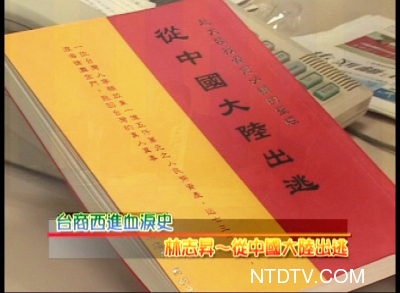
林志昇著書《從中國大陸出逃》描述赴中國大陸投資的血淚史(攝影:新唐人電視台)
林志昇1950 年生,年少時就亨通台灣的補習界,是日本名城大學法學碩士,也創下第一個「台灣人從大陸偷渡金門」的案例,他為何要從中國大陸出逃?近日,由於中華民國政府與大陸要簽訂兩岸投保協議的政策引疑慮,恐誤導投資者忽視大陸惡質的現實投資環境,歷年來到大陸投資的台商受害者上街遊行訴願,使得台商在大陸受迫害問題再度湧上台海間。台商們慘烈地控訴說,到大陸投資的台商受害案件至今沒有任何一件得到妥善解決。十年前,林志昇的例子就是一個具體而微的實例。
因為舅舅是台北市某大補習班的創辦人,林志昇自初中一年級開始就在舅舅的補習班幫忙印考卷、掃地。即使是就讀台北市立建國高級中學,高雄醫學院藥學系的寒假、暑假期間,都在學而補習班打工。經歷了補習班的任教,28歲的他以新台幣80萬元創辦台北市「學文補習班」開始了補教事業,八年後,林志昇以新台幣1200萬元賣掉所有補習班,退出台灣補教業。
1991年,由於嚮往祖國的山川,他選擇到上海籌辦學校,與上海交通學校合辦中國大陸第一家中外合作學校--上海太平洋職業技術學校,當時,《解放日報》、《人民日報》皆大篇幅報導上海太平洋職業技術學校創校。在 2000年10月,林志昇將手下的成都太平洋學校、成都嘉好實驗學校、恩立德學院、成都星星外國語學校與恩立德教育網站有限公司結合創辦恩立德教育集團。
奈何文化大革命之後的中國大陸變成了「假、惡、鬥」的黑窩,即使公、檢、法部門的公平正義都淪陷了。2002年1月5日,林志昇被兩人綁架、毆打,在成都軍區八一骨科醫院治療了兩個月。令人錯愕的是,隔天,雙流縣人民法院宣佈拘留林志昇15天,綁匪反被放回。2002年6月10日上午10時,雙流縣人民法院執行庭以閉門方式拍賣林志昇的成都嘉好實驗學校,由成都市教育局得標。
林志昇為求自己生命的安全,他放棄了在大陸的一億五千萬人民幣資產,選擇出逃。他逃亡三千公里回到台灣。根據他自己的著作《從中國大陸出逃》記載,2002年6月29日,他逃到臨海的廈門,然後搭上舢舨偷渡到金門北山上岸,隔天中午從金門搭乘復興航空班機回到台北。
2002 年,他出版了《從中國大陸出逃》,曾震起台灣政壇風波。遺憾的是,到大陸投資的台商受害案件至今沒有任何一件得到妥善解決,十年前如此,十年後仍然如此。大陸以外的華人,尤其是台灣抱著「同文同種血濃於水」的思維,昧於中國共產黨「假、惡、鬥」的西來撒旦幽靈真面目,失敗者前仆後繼,受難者水深火熱。
對曾身為台商的林志昇而言,每每被問到到大陸投資應如何保護自己身家財產安全?他表示不去大陸投資才是最明智的自保之道。針對前仆後繼的西進,他表示「同文同種血濃於水」的思維,讓許多台商進入失敗的圈套,其實很多台商在大陸己一無所有,但為了面子虛榮,台商寧可忍氣吞聲。
2008年5月28日,林志昇曾以投資中國受迫害台商代表的身份;前往中華民國行政院陸委會求見主委賴幸媛。當時,馬政府上任後,兩岸積極交流,但一萬多件台商受迫害案件中沒有任何一件案件得到妥善解決。陳情是希望獲得新政府實質的關注。
幸運逃過劫難的他,2002年回到台灣從頭開始,當時,他特別呼籲台灣的經營之神王永慶、經營達人台機電的張忠謀一定要理智地多多注意大陸的土地政策以及稅制問題,不要將產業及員工福祉毀在中國共產黨手中。
林志昇的著作《從中國大陸出逃》描述赴中國大陸投資的血淚史。

@*
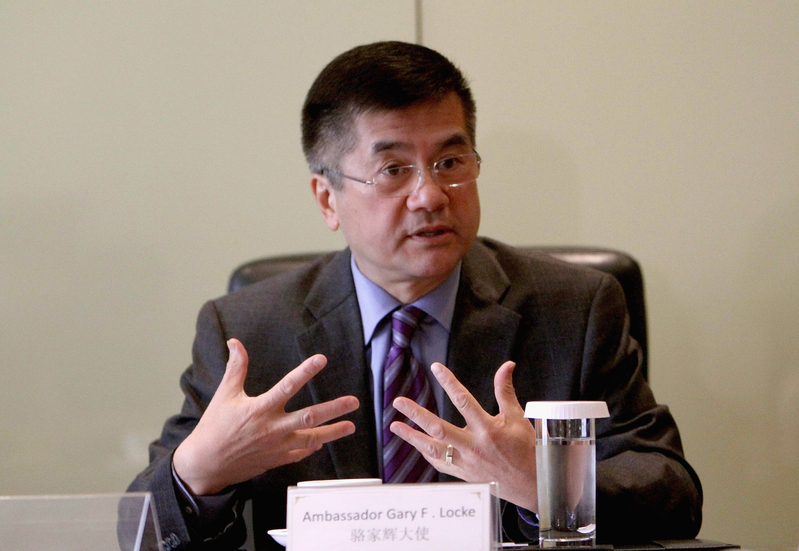
骆家辉平静回答:作为政府官员,不管是我们领事馆的官员还是北京大使馆的,也包括总统的内阁成员,一般的规则就是坐飞机时坐经济舱。
他还表示,自己代表了美国人的真实做法,希望展示的这种开放性,能够让中美两国人民更多地认识彼此,打破一些壁垒,消除误解,尽管我们有些文化、政治、经济和哲学方面存在差异。
广东律师梅春来分析说,芮成钢蓄谋已久的话,目的是想代表中国当权官员羞辱一下骆家辉,但骆家辉随后那一段言论不仅没有让骆家辉难堪,反而让芮成钢闹了个满脸红,更让那些自我感觉良好的政府官员无地自容。
梅春来表示:“从芮成钢的话里分析,我们似乎比美国佬牛多了,因为美国还欠我们的钱,我们是债主,我们国家有的是钱……我们的实况是一大批老人没钱养老,一大批孩子上不起学,甚至是有些智障的儿童被卖到黑矿去做工,我们现在是生不起孩子,死不起老人,上不起医院,面对这样的实情,已有媒体责问为什么解决不了这些问题,官方回答:我们没有钱。”

芮成钢的问题被网络各处转载,引起民愤。很多网友认为他的问题实在是太愚蠢,无法理解,甚至有网友嘲笑他是卧底,故意令党国难堪。
网友“蟋蟀他哥”说:“把一个当局希望尽快遗忘的事情重新提起,引发围观,我怀疑芮记者是美国的卧底……”
而网友“wchp006”接口表示,这还不是最关键的,最关键的是,总用最傻的问题让世界人清楚:原来美国才是对的,中共政府才是错的,这要不是卧底,实在是说不过去了。
不过骆家辉上任时轻车简从,乘坐经济舱不做VIP等,尽管引起中国民众的关注和好评,但却遭到中共喉舌攻击。前不久光明网一篇署名文章《警惕骆家辉带来的美国“新殖民主义”》,对新任美国驻中国大使骆家辉亲民予以讥讽,称之为“收揽民心”,想“以华治华”,更冠之以美国“新殖民主义”、“文化殖民主义”。引起网络极大反响。
因此有网友感叹表示,芮成钢嘲笑美驻华大使骆家辉出行坐经济舱,党媒呼吁警惕骆家辉的新殖民主义;另一边是湖北省委巡视组13人赴贫困县秭归县巡视,20余天花费80.19万元,喝了30瓶酒,抽了55条烟;购置两部手机,10部平板电脑。新殖民主义?我不介意!
而央视主持芮成钢的出格,并非首次,去年11月12日,在韩国首尔20国集团峰会落幕之际,芮成钢在奥巴马记者会上抢韩国媒体的提问机会,并自称“代表亚洲”惹来非议。众网友表示;对不起,我们不需要你代表。有媒体报导称,芮成钢此举只是被豢养的一些文士利用自身的话语权来为主人造势而已。
而在2009年伦敦G20峰会的千人记者会上,芮成钢向奥巴马提出了两个问题,自称第一个问题是代表中国问的,第二个却是代表全世界,也遭到大量的炮轰。
同样,这次芮成钢言论再度遭到网络围攻,网友“伏拉迪奥斯托”表示,长着一个专制下成长的典型封建脑袋,却非常自以为是,所说的每句话都愚蠢得让人鄙视。
网友“无敌白菜皮皮”表示,中国的领导出行前呼后拥,场面阔气,难道是提醒中国人民欠领导的钱?
网友“rosslaw”表示,芮的问话简直就像一土财主,呵。但没人逼你去买美国国债,是你抢着买的,就如今市场的风险规避来说,你是得便宜还要卖乖。
网友“杰迪归来”表示,小人得志便猖狂,这就是中国人始终不能得到真正尊重的原因。寡廉鲜耻。
网友“临泉之树”表示,听说你上次代表了亚洲,让世界第一强国的总统奥巴马差点下不来台,这次不知又代表了谁,冷嘲热讽了一次美国的大使骆家辉,既然你这么牛逼,为什么不问问我们的高官:问问他们为什么物价这么高?房价这么高?问问他们为什么有人看不起病,上不起学?问问他们为什么现在腐败成风?问问他们什么时候政务透明,财产公开?问问他们中国什么时候实现公平公正?
http://epochtimes.com/gb/11/9/15/n3373017.htm

When a CCTV host posed a flippant question to U.S. Ambassador Gary Locke, not only did the ambassador handle it courteously, but Chinese netizens raced to his defense.
Ambassador Locke was interviewed at the World Economic Forum in Dalian on Sept. 14. The host, Rui Chenggang of the state-owned CCTV asked him, “I hear you flew here coach. Is that a reminder that the United States owes China money?”
“As government officials, whether we are officials posted to consulates or to the embassy in Beijing, including members of the president’s cabinet, the general rule is to fly economy,” replied Locke.
Locke went on to say that he represents the American way. He hoped that his openness can help the people of China and the United States learn more about each other, break barriers, and dispel misunderstandings, though there may still be some differences of culture, politics, economics, and philosophy.
Rui, however, continued to rip into Locke’s reply on his blog, saying, “He seizes every occasion and opportunity and spares no effort to publicize and promote American values. He only talks about what is good about the United States, but seldom mentions what is bad about the United States. It’s his job. He is probably someone who likes to be noticed and is the best at showing himself off among all the U.S. diplomatic staff in China.”
Commenting on the CCTV host’s challenging question, Guangdong lawyer Mei Chunlai told the Epoch Times: “The question was one which Rui, backed by powerful Party members, had carefully constructed to insult Locke. However, because of the common-sense reply, Locke not only was not humiliated, but made Rui look embarrassed. The Ambassador unintentionally made those smug Chinese officials feel quite ashamed.”
“From Rui’s words,” Mei continued, “it seems we Chinese are much better than the United States because they owe us money. We are the creditor. Our country has plenty of money….”
“But the reality is that we have many elderly people who have no money to live, children who cannot afford to go to school, and some mentally retarded children are even sold to work in coal mines. We can’t afford proper natal care, the elderly can’t afford to die, and many people can’t afford health care. Facing this reality, some media have questioned why [the state] doesn’t solve these problems. The officials answered, ‘We don’t have the money,’” Mei said.
Rui’s question has been re-posted everywhere on the Internet. It has been constantly ridiculed and many people think his question was really crass.
“I hope my idol Rui can ask Chinese officials, ‘You always fly first class. Is this a reminder that you owe the people a lot of money?’” commented Li Chengpeng, a well-known blogger. These words have been re-posted more than 22,000 times, and garnered more than 7,600 comments. (Http://t.sina.cn/dpool/ttt/home.php?uid=1189591617&vt=3)
“The comment reminds the rest of us what the authorities would like us to forget as soon as possible, and so has attracted much attention,” Li said.
Another netizen wrote, “I suspect that Rui is an undercover agent for the United States,” since his comment backfired.
As an example of comments to Rui’s own blog, Huang Haoyuan wrote, “Officials from other countries who are industrious and thrifty are considered by Rui to be “show-offs.” Then, what about our own officials who squander public funds?”
From the beginning of his diplomatic assignment, Locke has behaved with simplicity. He flew economy class to China, and he and his family carried their own bags after they deplaned. These simple acts have drawn attention and praise from the Chinese people, but have been attacked by the CCP’s mouthpiece media.
Follow The Epoch Times’ China feeds on Twitter @EpochTimesChina.

共同捍卫核心价值
何俊仁指出从七一游行到李克强访港警方采访安排,一连串事件凸显在中共的干预下,香港的核心价值逐渐被侵蚀,“使香港人很有理由关心,也很有理由感到忧虑,大家应团结起来,一起捍卫核心价值。”
何俊仁表示,早前在立法会上曾向保安局长李少光提出质询时,李少光肯定的说蔡佩雯当时不是记者,是非法参与示威活动。何俊仁要求当局提出证据证明,但至今未获回应。
公开审讯呈现真相
何俊仁又指,警方说词矛盾,初时声称没有拘捕记者,其后又诬陷记者是示威者。他表示,此次诉讼就是要厘清事实真相,并要求法庭作出惩罚性的赔偿,以警戒警方剥夺新闻采访自由的行径。
何俊仁强调,这次是香港首宗记者控告警务处长,起诉警方非法禁锢,非法拘留,打压新闻自由,并藉此“制止警方再无故打压记者采访”,而且这只是一个开端,以后会借司法程序,让大众了解事实。”
新唐人实习记者蔡佩雯在会上展示当日在现场采访的照片,她表示愿意挺身而出,捍卫香港的新闻采访自由,她“当日采访新闻被捕,他日其他同行也会遭受同样机遇”,要制止此一违法行为。
总部位于纽约的新唐人电视台香港记者站实习记者蔡佩雯,早前在七一警方清场过程中,被当示威者拘捕扣留超过10个小时。新唐人香港主管对事件表示强烈抗议。香港记者协会和国际记者联会对事件表示十分关注,并发出声明,要求警方解释。人权监察批评警方手法离谱,并质疑当中涉嫌歧视行为。其后国际特赦也召开记者会表达国际社会对事件的关注。◇
http://www.epochtimes.com/gb/11/9/9/n3368094.htm

HONG KONG—Hong Kong-based reporter Kiri Choy has filed a lawsuit against the police for illegal detention.
On Sept. 8, Kiri Choy announced at a press conference that she is suing Hong Kong Police Chief Wai Hung Andy Tsang for arresting her while she was taking an interview on July 1 and for detaining her for more than 10 hours.
She was accompanied by Albert Chun-yan Ho, chairman of the Hong Kong Democratic Party. Mr. Ho stressed that this was the first lawsuit by a reporter against the police for an illegal arrest, and that the Democratic Party would fully support the lawsuit.
Mr. Ho said that the fact that the Hong Kong Police had continued to detain Ms. Choy even after learning her identity as a reporter was a gross violation of the core values of Hong Kong. “If we don’t have freedom of press, then we’ve lost more than half of our basic freedom of expression.”
He added that from the police’s reaction during the rally on July 1 to the visit by China’s Vice Premier Li Keqiang, it is clear that the Chinese Communist Party has interfered with a series of events in Hong Kong.
“The people of Hong Kong have a reason to care and be concerned. We should stand united to safeguard our basic values,” Mr. Ho said.
Mr. Ho said that the police’s accounts of the arrest were self-contradictory. At first, they denied detaining the reporter. Later, they accused the reporter of being a demonstrator. He said the purpose ofthe lawsuit was to clarify what truly happened and demand that the court uphold justice.
He said that this was the first case filed by a reporter in Hong Kong against the police chief for illegal detention and suppression of thefreedom of the press. He hoped the case can serve as a deterrent to the police. The goal is to stand up for the freedom of the press, Mr. Ho said.
Ms. Choy showed pictures of her conducting an interview on the day of her arrest. She said she was willing to step forward to safeguard press freedom in Hong Kong. She said that illegal arrests must be stopped, because “Now I was arrested for conducting an interview. Later other reporters will suffer the same fate.”
Ms. Choy is an intern reporter with the New York-based NTD Television. When the police were clearing out demonstrators on July 1, she was detained as a demonstrator and kept for more than 10 hours.


Senate Resolution 232 calls for the immediate cessation of the Chinese Communist Party’s campaign of suppression against the Falun Gong spiritual practice, and expresses solidarity with Chinese citizens who are peacefully pursuing freedom and dignity for themselves and their country.
Supporting this resolution sends a strong, moral message that the American people will not stand silently by in the face of egregious human rights abuses.
Falun Gong is a traditional spiritual practice of the Buddhist school that involves meditation and a moral philosophy centered on the values of truthfulness, compassion, and tolerance. In the 1990s in China, an estimated 70 million people benefited from the practice, which was at one time celebrated openly by Chinese authorities.
However, as the practice grew, Chinese leaders feared that Falun Gong was a source of ideological competition on account of its independence, popularity, and traditional spiritual content. On 20 July, 1999, the Communist Party launched a campaign to “eradicate” Falun Gong. Since then, Western journalists and human rights groups have documented the widespread extralegal imprisonment, systematic torture and death in custody of Falun Gong believers in China.
According to the U.S. State Department’s 2009 country report on human rights, adherents of Falun Gong have been estimated to comprise as much as half of China’s official reeducation-through-labor camp population, numbering in the hundreds of thousands. Research by journalist Ethan Gutmann suggests that upwards of 400,000 Falun Gong prisoners of conscience are currently detained in China; in some labor camp facilities, over 80% of detainees are Falun Gong practitioners. The Congressional Executive Commission on China states that the scope and intensity of the ongoing crackdown on Falun Gong is “unrivalled” since the commission began its work in monitoring human rights in China.
In addition to extrajudicial imprisonment, torture and killing, Amnesty International reports that Chinese authorities launched a “massive propaganda campaign” to demonize and erode public sympathy for Falun Gong, thereby justifying its persecution.
Falun Gong adherents have responded to this campaign of suppression using entirely peaceful means. Inspired by a belief in the power of truth to enliven people’s consciences and drive out hatred and violence, they have sought to educate Chinese citizens on the true nature of their spiritual practice, the persecution against it, and the wider history of the Communist Party of China. As a result of these efforts, in late 2004 a movement began in China that has seen tens of millions of citizens symbolically disavowing their affiliations to the Communist Party, whose policies and practices they can no longer support in good conscience.
By making a specific, unequivocal statement opposing the persecution of Falun Gong, the United States government can enhance its credibility as a champion of justice and human rights in the world. Moreover, Resolution 232 is consistent with the foreign policy objective of engaging not only with foreign governments, but also with their people. Although China’s leaders may not appreciate censure, the Chinese people – and posterity – will. A China in which Falun Gong’s values of truthfulness, compassion, and tolerance can be freely practiced will be a more responsible, transparent, and stable international partner.
For more information on S. Res. 232: http://www.govtrack.us. To learn more about the persecution of Falun Gong: http://www.faluninfo.net.
YOU THOUGHT YOU knew a thing or two about China, right? That, for example, it was a communist dictatorship that censors news and spreads propaganda? A violent regime that tortures and executes its own, peaceful citizens in political campaigns? A regional aggressor that is building a formiddable military? Well, Xinhua, the official newsagency of the Chinese Communist Party (CCP), is here to tell you that you got that all mixed up. And they will be telling you that, every day until you learn, with a prominent billboard in Times Square very soon.
The Chinese regime’s Xinhua news agency is leasing one of the most prominent advertising spaces at the iconic landmark. A new LED sign, 60 feet high by 40 feet, will replace the decade-old HSBC bank sign on the building at the northern anchor of the district by next Monday.

(Photo: The HSBC sign on 2 Times Square will soon be replaced by a Xinhua billboard. new-york-pictures.com)
Xinhua, a state-owned “news” organization, has been called the “World’s Largest Propaganda Machine” by Reporters Without Borders.
The New York Times reported:
Reports by Xinhua on topics like Taiwan and Tibet, which are of considerable political concern to its government bosses, are not necessarily known for being objective.
But “not necessarily known for being objective” is a vast understatement. Xinhua is the leader of news agencies in China—in censorship, propaganda, and overall “thought management.”
When Jiang decided to launch a persecution against the spiritual practice Falun Gong in mainland China in 1999, Xinhua was his main tool for the mass propaganda campaign that followed. Between 70 and 100 million Chinese people who followed the practice at that time were denigrated in bilious and hateful terms. The propaganda was a crucial part in the dehumanization of practitioners, and paved the way for violent persecution.
Xinhua had played a role in previous political campaigns, too, of course, many of them also violent. Apart from agitating for hatred, however, Xinhua is also a broerk for the more mundane lies of everyday Chinese life. What would a dictatorship be without lies, after all?
When the 2003 SARS outbreak coincided with the transition of power from former communist leader Jiang Zemin to Hu Jintao, Xinhua chose to keep quiet for much of early stages of the 2003 SARS epidemic, resulting in delays in efforts to control the epidemic.
 When Western media such as CNN and BBC reported on Chinese police opening fire on Tibetans in 2008, Xinhua said that they had misrepresented the events by cropping the news photos “improperly.” One such cropping lesson (see photo on the right), as demonstrated by the Chinese embassy, cropped out a knife-wielding protester (top-right corner) when Chinese officials realized that he was a Chinese policeman dressed in Tibetan clothes.
When Xinhua was designated the official source for reporting on the recent “Arab Spring” uprisings, Xinhua showed how Egyptians were anxious to end the “riot” and get back to normal life and published a series of photos showing how violent the civilians were in overthrowing their dictator.
And now, Xinhua is officially moving to the West.
Xinhua set up an office at Times Square in May at 1540 Broadway, introduced a 24-hour English-language broadcast service last year that seeks to reach 50 million viewers around the world, and soon it will have a Times Square advertising spot alongside those of American insurance company Prudential, Coca-Cola, Samsung, and Hyundai.
A media researcher from Hong Kong Universtiy, David Bandurski, said:
China sees the creation of a positive international image as the last major hurdle on the road to superpower status.
And the communist leaders will do this in two steps, as specified by Information, a Danish newspaper that obtained secret documents from Party Central:
A positive outlook on China will be disseminated through a comprehensive campaign to fight what Beijing sees as a Western smear campaign against China. At the same time, it must be prevented that critical voices and critical news reports find their way to foreign media columns.
As communist voices shift westward, Americans, are you ready to be mass educated—Xinhua-style?


 |
|  |
| 
The officials claimed the station had to be shut down because its broadcasting was disrupting the air traffic in the nearby city-state of Singapore.
When Tan, Gatot Machali, the radio’s executive director, and five others at the station tried to explain that the station was operating legally, the authorities simply darted for the transmission room with one of them trying to break the door’s padlock with a hammer.
“Gatot and I tried to stop them from hammering the door,” Tan said. “But they forcibly opened it using the tools they brought and took two things from the transmitter, one was exciter and one was the audio processor,” two pieces of equipment needed for broadcasting.
Devastated to see their six years of work going down the drain, Tan and Machali rushed outside, hoping to stop the authorities’ cars from driving away, only to find themselves helpless and outnumbered.
While the Indonesian officials held a piece of paper in their hands that they said justified their actions, no copy of it ended up in the hands of Tan or Machali.
“We are very sad. We cannot accept this in a democratic country,” Tan said. “If Indonesia is a country with law. I think the government should respect the law. They have to respect the law. … We are not breaking any law.”
The Indonesian government had previously reassigned Erabaru’s frequency, 106.5, to the station Sing FM. That station, which had been broadcasting on 105.5 FM, transferred to 106.5 immediately after the raid.
Allowing the Sing FM broadcasts on Erabaru’s former frequency calls into question the claim that Erabaru’s broadcasts interfered with air traffic in Singapore.
“You have to prove that [the air traffic interference] really happened,” Tan said. “It’s not just who said, who complained. We have been broadcasting for so many years that there’s no such thing happened. If there’s an air traffic disruption, why is Sing FM broadcasting on 106.5?”
Unconvinced by the air traffic explanation, Tan and his colleagues believe that the forced closure has deeper reasons.
Erabaru’s broadcasts, 30 percent of which are in Chinese and 70 percent in Indonesian, reach a large ethnic Chinese population in nearby Singapore, 150,000 ethnic Chinese on Batam, and heavy freighter traffic, including many Chinese ships, in the nearby sea lanes. Radio Erabaru carries reports on the human rights abuses committed by the Chinese regime against Falun Gong adherents, Tibetans, Uyghurs, and others inside China, which greatly annoys China’s communist regime and most likely explains the embassy’s attempts to close the station.
Only after the embassy’s intervention in 2007 did Indonesian authorities in 2008 deny the station’s license, reassign its frequency, and begin a process of other bureaucratic restrictions. In March 2010, a similar raid with broadcasting equipment taken away was carried out by officials who said they were acting because Erabaru did not have a permit to use its frequency.
“I think all these things happened because of the Chinese communist regime,” Tan said. “If it wasn’t for the intervention from the Chinese regime, it wouldn’t have happened like this today. We feel that is very unfair. The government should not listen to the Chinese communist regime, as Indonesia is a democratic country. It should have its own dignity and own ruling.”
“We had been broadcasting from 2005 and we had everything—equipment, manpower, program. Everything was there. … There’s no reason that they were not issuing us a permit,” said Tan.
Despite the 2010 ransacking of the station, Tan and his colleagues repurchased their equipment and were able to continue with their broadcasts. They have sued the government and are waiting for a decision by the Supreme Court. With the Supreme Court not having decided, they were surprised to find authorities in their station again a few days ago.
“We thought this time [since] we were appealing, so they wouldn’t do anything to us,” Tan said. “That was what we thought, so we weren’t prepared. Because the case was still under appeal, they wouldn’t take any action to close down the radio station. We did not expect that they came on Sept. 13.”
If they win the case, Radio Erabaru would be able to get its 106.5 FM frequency back, but in the mean time, Tan said if they continue their broadcasts, Erabaru will have to share 106.5 FM with Sing FM, which would cause mutual interference.
“The most important point is that the court cases should stay in the court, authorities should not take any actions to shut the radio station down,” Tan said. “From what we understand is that they have to wait until the court has the verdict, otherwise they are just not respecting the law here.”
In the most recent case involving Erabaru, a court noted that the station had been treated differently by Indonesian authorities.
On Sept. 6, Machali was convicted of operating a radio station without a license, receiving a suspended six-month jail term with one year of probation, along with a fine of 50 million Indonesian rupiah (US$5,800).
The decision in his case noted that it had been proven in court that there are many radio stations in Indonesia broadcasting without licenses or frequency permits. While they also break the law, they are not charged by the authorities, according to the decision.

Recent Comments