Uncategorized

  • 華府抗議韓國遣返法輪功 美

    華府抗議韓國遣返法輪功 美議員致信李明博

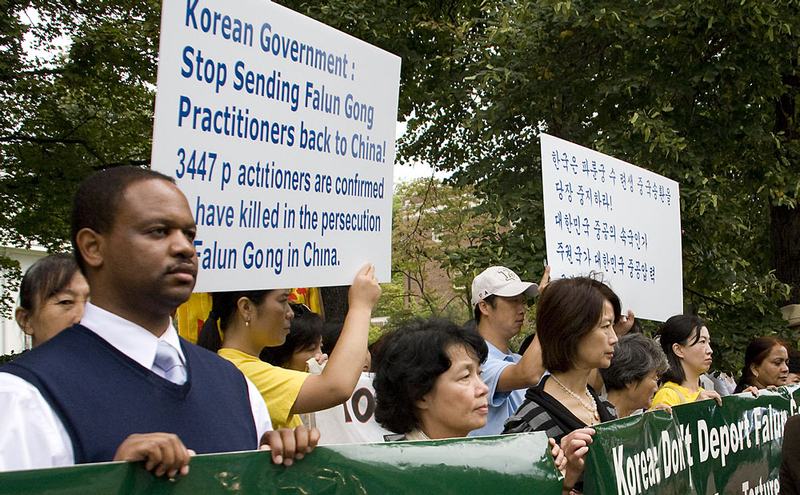
    2011年9月15日中午,法輪功學員在位於華盛頓市區馬塞諸塞大道旁的韓國駐美國大使館前集會,呼籲韓國政府停止遣返法輪功學員。(攝影:李莎/大紀元)


    【大紀元2011年09月16日訊】(大紀元華府記者站美國華盛頓DC報導)2011年9月15日中午,大華府地區部份法輪功學員在韓國駐美大使館前集會,抗議韓國政府屈從中共壓力,強制遣返居留在韓國的中國法輪功學員。 CreateDomIframe(“google_ads_div_DJYwww_articles_news_below-header_ad_container” ,”DJYwww_articles_news_below-header”);

    美國加州聯邦眾議員約翰‧嘎拉門迪(John Garamendi)發表聲明,敦促韓國駐美大使和李明博總統重申韓國60年前簽署《聯合國難民公約》時所做的承諾,為逃離信仰迫害的法輪功學員提供安全之地。

    來自美國加利福尼亞州的資深國會眾議員戴納‧羅拉巴克(Dana Rohrabacher)也在9月15日致信韓國總統李明博,呼籲首爾政府立即停止將法輪功學員遣返回中共統治下的中國。


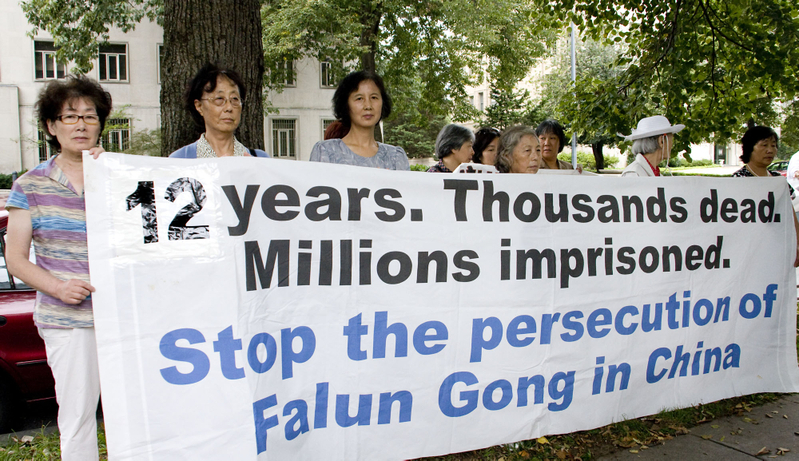
    2011年9月15日中午,法輪功學員在位於華盛頓市區馬塞諸塞大道旁的韓國駐美國大使館前集會,他們手持橫幅,呼籲韓國政府停止遣返法輪功學員。(攝影:李莎/大紀元)


    2011年9月15日中午,法輪功學員在位於華盛頓市區馬塞諸塞大道旁的韓國駐美國大使館前集會,他們手持橫幅,呼籲韓國政府停止遣返法輪功學員。(攝影:李莎/大紀元)


    2011年9月15日中午,法輪功學員在位於華盛頓市區馬塞諸塞大道旁的韓國駐美國大使館前集會,他們手持橫幅,呼籲韓國政府停止遣返法輪功學員。(攝影:李莎/大紀元)

    這一事件也引起了韓國非政府組織的關注。大韓民國國家統一顧問委員會(NUAC)華府分會主席洪慶熙說,如果在韓國避難的法輪功學員被遣返,將面臨更嚴重的迫害,就會像中共政府遣返北韓難民一樣造成惡劣的後果。洪慶熙在接受大紀元採訪時表示,將盡力聯繫在韓國有影響力的人權組織,讓他們瞭解此事的詳細經過,引起韓國社會的關注。

    近日,韓國法務部首爾出入境管理事務所工作人員闖入一名法輪功學員的家中,將其綁架之後連夜移送至外國人拘留中心。目前,該法輪功學員隨時面臨被強制遣返回中國的危險。這是韓國政府近兩年繼遣返十名中國籍法輪功學員後,對申請難民被拒的中國法輪功學員採取的又一次惡性行動。

    9月15日中午,數十名法輪功學員在位於華盛頓市區馬塞諸塞大道旁的韓國駐美國大使館前集會,他們手持橫幅,呼籲韓國政府停止遣返法輪功學員。幾名韓裔法輪功學員也來到集會現場,他們手舉韓文標語,呼籲韓國總統李明博不要屈從中共,支持道義良知。三位法輪功學員與韓國大使館有關官員見面,詳細講述了中共迫害法輪功真相。

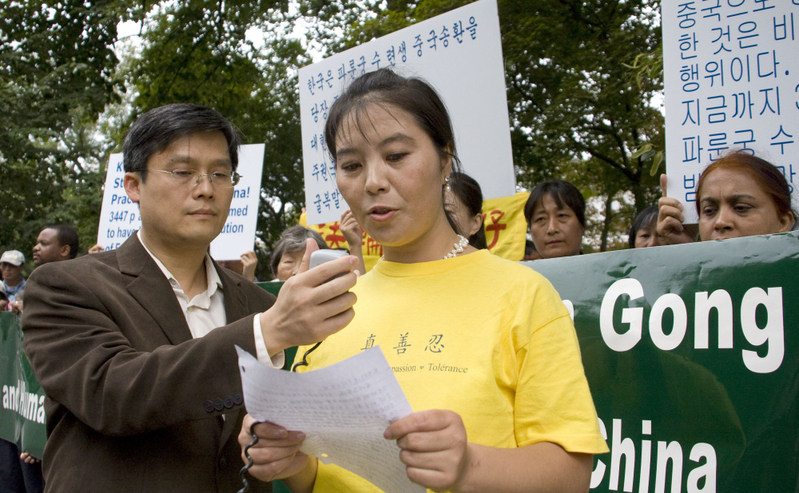
    多位逃離中國大陸的法輪功學員在集會上講述了他們遭受酷刑迫害的親身經歷。


    2011年9月15日中午,法輪功學員在位於華盛頓市區馬塞諸塞大道旁的韓國駐美國大使館前集會,呼籲韓國政府停止遣返法輪功學員。圖為幾名韓裔法輪功學員在集會上呼籲韓國總統李明博不要屈從中共,支持道義良知。(攝影:李莎/大紀元)


    2011年9月15日中午,數十名法輪功學員在位於華盛頓市區馬塞諸塞大道旁的韓國駐美國大使館前集會,呼籲韓國政府停止遣返法輪功學員。圖為逃離中國大陸的法輪功學員馬春梅在集會上講述她遭受酷刑迫害的親身經歷。(攝影:李莎/大紀元)


    2011年9月15日中午,法輪功學員在位於華盛頓市區馬塞諸塞大道旁的韓國駐美國大使館前集會,呼籲韓國政府停止遣返法輪功學員。(攝影:李莎/大紀元)

    羅拉巴克議員呼籲韓國政府停止遣返法輪功學員

    9月15日,來自加利福尼亞州的資深國會眾議員戴納‧羅拉巴克(Dana Rohrabacher)致信韓國總統李明博,呼籲首爾政府停止將法輪功學員遣返回中國。

    羅拉巴克議員在信中說,他已經注意到和平的法輪功學員面臨被韓國政府遣返回中共政權統治下的中國的威脅。一旦被遣返,他們的生命將受到嚴重威脅。

    羅拉巴克議員表示,基於美韓同盟建立的原則,法輪功學員的人權應該得到尊重,他們的安全應該受到保護。他說,美韓同盟的建立是為了抵制共產黨的壓迫和侵略,無論是來自平壤還是北京。 法輪功應被視為擁有共同價值觀的朋友。

    韓國總統李明博將於10月到訪華盛頓,羅拉巴克議員表示希望遣返事件不會發生。


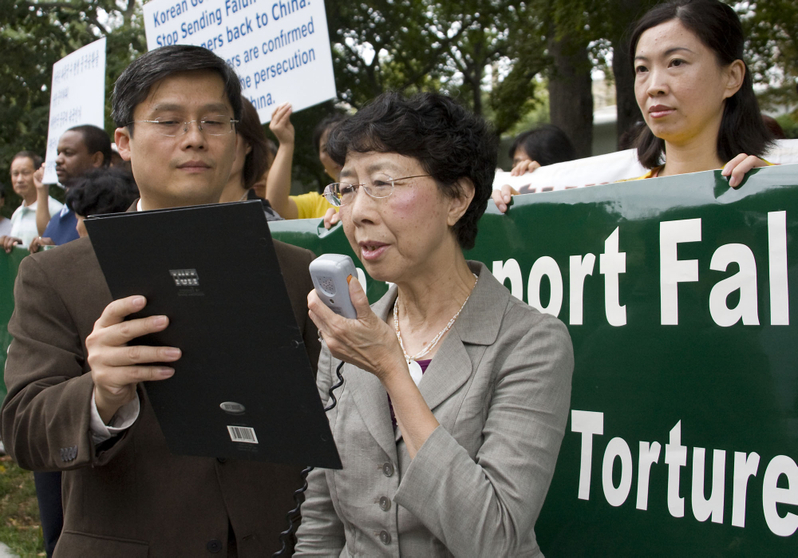
    2011 年9月15日中午﹐法輪功學員在位於華盛頓市區馬塞諸塞大道旁的韓國駐美國大使館前集會,呼籲韓國政府停止遣返法輪功學員。圖為法輪功學員在集會上宣讀加利福尼亞州聯邦眾議員約翰‧嘎拉門迪(John Garamendi)就這一事件發表的聲明。(攝影:李莎/大紀元)

    嘎拉門迪議員呼籲韓國政府履行承諾 為法輪功學員提供安全之地

    另一位加利福尼亞州的聯邦眾議員約翰‧嘎拉門迪(John Garamendi)為法輪功學員在韓國駐美大使館前舉行的集會發表聲明。

    嘎拉門迪在聲明中說,僅僅在過去兩年之內,就有10名避難的法輪功學員被遣返回中國,在中國,法輪功學員面臨拘留、強迫勞動、酷刑、精神虐待,經常被迫害致死。今天,仍有58位法輪功學員面臨被從韓國遣返回中國的威脅,我敦促(韓國)司法部毫不含糊的重新考慮對這個和平群體採取的現行政策。

    嘎拉門迪議員說,韓國政府與其它127個國家於1951年簽署了《聯合國難民公約》,承諾為難民,就像那些逃離信仰迫害的法輪功學員,提供安全的避風港,然而韓國政府不是抵制中國的暴力和不公,而是在這場毫無人性的(迫害)中充當幫凶。

    嘎拉門迪議員在聲明中敦促韓國駐美大使和李明博總統立即重申韓國60年前做出的承諾,他敦促韓國政府朝恢復這一承諾邁出第一步,特赦面臨遣返的兩位法輪功學員。

    嘎拉門迪議員說,他有機會與幾位遭受中共酷刑迫害的法輪功學員見面,他們痛苦的遭遇、被迫妻離子散、被迫害致死的經歷,更突出了這一事件的緊迫。他呼籲,韓國必須採取行動,改變目前的做法,為法輪功學員提供他們本應享有的安全避風港。

    http://www.epochtimes.com/b5/11/9/16/n3374419.htm%E5%8D%8E%E5%BA%9C%E6%8A%97%E8%AE%AE%E9%9F%A9%E5%9B%BD%E9%81%A3%E8%BF%94%E6%B3%95%E8%BD%AE%E5%8A%9F-%E7%BE%8E%E8%AE%AE%E5%91%98%E8%87%B4%E4%BF%A1%E6%9D%8E%E6%98%8E%E5%8D%9A


  • Glasgow twin city in illegal organ trade

    Glasgow twin city in illegal organ trade

    Published on 5 Sep 2011

    GLASGOW’S prestigious links to a Chinese port city have been dealt a blow after claims emerged that hospitals there are involved in harvesting organs illegally from people while they are still alive.

    Today a major conference in at the Scottish Exhibition and Conference Centre will hear claims that medical staff in Dalian, north-east China, are involved in a black market in organs removed from prisoners and execution victims.

    It is thought around 65,000 members of the banned Falun Gong spiritualist group, which opposes China’s rule in Tibet, have been killed for their organs.

    The city is understood to be cashing in on a black market in kidneys and livers that brings in wealthy health tourists from around the world. Glasgow has been twinned with Dalian since 1987 and Lord Provost Bob Winter led a delegation to build sporting links between the cities in 2008. Plans are also under way to work on links between the two cities’ schools.

    Human rights activists last night described the crime of organ harvesting as rife in Dalian. Yuyu Williamson, a Glasgow-based Chinese human-rights activist, said: “Adverts are regularly placed in Dalian newspapers advertising livers and kidneys for sale. Dalian City Friendship Hospital and Youyi Hospital run blatant advertisements promoting organ transplants and there was a high-profile report of man frozen by the Dalian Police Bureau – in conspiracy with the Third Hospital of Dalian – so they could steal his organs.

    “In June this year, 30 Falun Gong practitioners were arrested in the city and there are fears they have been killed.”

    A Nobel Peace Prize nominee will speak at the Glasgow event organised by Doctors Against Forced Organ Harvesting campaign group. David Matas, a Canadian human rights lawyer, was put forward for the honour last year after exposing China’s illegal organ trade in a book.

    Trading in human organs is illegal in China but the black market has flourished over the past decade and human rights groups have alleged that hundreds of hospitals in China raise funds by selling kidneys and livers.

    Falun Gong combines qigong exercises and meditation with moral philosophy centred on “truth, compassion, and tolerance”, but China’s Communist Party claims the group is a dangerous cult and outlawed it for “illegal activities” in 1999.

    Hundreds of thousands of practitioners are thought to have been imprisoned in labour camps in an attempt to “correct” their views.

    Mr Matas revealed in the book that in addition to using organs from executed prisoners, China has gone to the point of harvesting organs from living “prisoners of conscience”.

    He said between 2000 and 2005 there were 41,500 transplants carried out in China. “China acknowledges organs for transplants come overwhelmingly from prisoners. Their claim is that prisoners consent before execution to allow the use of their organs for transplants.

    “We concluded the bulk of these prisoners are Falun Gong practitioners who do not consent, who are killed by the organ harvesting operation and who are not sentenced to death.

    “The government of China admits organs are sourced predominantly from prisoners. What then is it trying to hide by not providing numbers? One compelling answer is that it is trying to hide the killing of Falun Gong for their organs.”

    A Glasgow City Council spokesman said: “Illegal organ harvesting is clearly a deplorable practice. Human and civil rights are a fundamental part of the council’s outlook and these issues were raised by the Lord Provost when he was in China in 2008.”

    The Chinese embassy declined to comment.

    http://www.heraldscotland.com/mobile/news/home-news/glasgow-twin-city-in-illegal-organ-trade-1.1121696


  • Dear Mother

    Uploaded by on Jan 7, 2009

    A group of daughters in the U.S. work to rescue their mothers detained in China for their beliefs.


  • S. Korea Asked to Stop Repatriations to China

    S. Korea Asked to Stop Repatriations to China

    Urged to end deportation of Falun Gong practitioners

    By Ivan Pentchoukov
    Epoch Times Staff
    Created: Sep 15, 2011 Last Updated: Sep 15, 2011
    Print | E-mail to a friend | Give feedback
    Related articles: World > International

    New Yorkers gather to appeal for an end to deportations of Falun Gong practitioners from South Korea to China. They stand outside the Consulate General of the Republic of Korea in Midtown Manhattan on Wednesday. (Amal Chen/The Epoch Times)

    NEW YORK—New Yorkers appealed outside the Korean Consulate on Wednesday to call for an immediate stop to deportations of Falun Gong practitioners from South Korea to China, including a young Chinese couple who face imminent return to danger.

    More than 70 people gathered with posters and signs in response to the Sept. 6 arrest of Falun Gong asylum seekers Jin Jingzhe and Ma Yue in South Korea. Several met with Assistant Consul Kying Ryun Park to inform him of the latest development and deliver a letter.

    “The Korean government must stop it immediately,” said Seog One Ha, 28, a Korean citizen studying at Columbia University. “It is related to a person’s life. A person’s life is prior to any terms or laws.”

    Ha delivered a letter to the consul on behalf of Falun Gong practitioners in metropolitan New York. Park assured Ha that the message would be delivered up the ranks at the consulate.

    According to the Korea Falun Dafa Association, 100 Falun Gong practitioners have been denied refugee asylum in South Korea and face deportation. The deportation of Falun Gong practitioners is in violation of the United Nations Convention on the Status of Refugees and the Convention Against Torture. South Korea signed both treaties.

    According to the letter addressed to the consul, Falun Gong practitioners risk imprisonment, brutal torture, and death if they are sent back to China.

    “Sending Falun Gong refugees back to China is inhumane, unjust, and contrary to international law,” said a statement from Levi Browde, executive director of the Falun Dafa Information Center. “We urge the South Korean government to resist any pressure coming from the Chinese Communist Party (CCP) and offer Falun Gong practitioners a safe haven from persecution.”

    The Falun Dafa Information Center has documented thousands of deaths of Falun Gong practitioners in China since the CCP began waging a nationwide campaign of propaganda, imprisonment, and torture in 1999. Falun Gong, also known as Falun Dafa, is a traditional Chinese practice of meditation, gentle exercises, and application of the principles of truthfulness, compassion, and tolerance in daily life.

    Young Couple on the Brink

    A team from the Korean Ministry of Justice went to the Seoul home of Jin Jingzhe, 26, and his wife, Ma Yue, on Sept. 6. The couple was arrested on the grounds that they were illegal immigrants. Jin was taken to a “foreigner’s protection detention center.” Employees at the center informed Jin that he has seven days to write an appeal before being deported.

    “South Korea has stated that it wants to defend the rights of North Korean refugees abroad—to not be deported back to North Korea—because they understand that the situation in North Korea is that the refugees that are sent to North Korea would be subject to torture and maybe even death and execution,” said an American Falun Gong practitioner who attended the appeal. “It’s very hypocritical of them to turn around and [deport] Falun Gong practitioners.”

    Korean President Lee Myung-bak is scheduled to visit New York City Sept. 20–22. The president will attend an Appeal of Conscience Foundation ceremony to receive an award for his democracy and humanitarian efforts. Myung-bak will also meet with United Nations General Secretary Ban Ki-moon, who is well-known for his work on human rights.

    “It’s very ironic,” said Woo Kim, 19, a dual citizen of the United States and Korea. “I have heard of other practitioners being deported to China—there’s been 10 people so far. It’s not really surprising to me because I know how active the Chinese Communist Party spies are in South Korea.”

    Jin, who has less than two days left before being deported, actively participated in peaceful Falun Gong protests in South Korea, exposing the persecution of the practice by the Chinese Communist Party. Jin also worked for New Tang Dynasty Television and covered stories sensitive to the political regime in China.

    The consulate general of the Republic of Korea did not return calls by press deadline.

    http://www.theepochtimes.com/n2/world/s-korea-asked-to-stop-repatriations-to-china-61655.html


  • Religious Freedom Still Languishes Worldwide: US State Dept

    Religious Freedom Still Languishes Worldwide: US State Dept

    New concerns emerge in Arab Spring states

    By Mimi Li
    Epoch Times Staff
    Created: Sep 15, 2011 Last Updated: Sep 15, 2011
    Print | E-mail to a friend | Give feedback
    Related articles: World > International

    US Assistant Secretary of State Michael Posner speaks during a press conference, in 2010, at the UN Offices in Geneva. (Fabrice Coffrini/AFP/Getty Images)

    A Christian is beaten and tortured in Eritrea for refusing to renounce his faith; a Buddhist monk is jailed in Burma for denouncing restrictions on religious assembly; a Bahai in Iran is denied employment or education; a Falun Gong practitioner in China is sent to a re-education through labor camp for his beliefs.

    These everyday occurrences are examples of—and a drop in the bucket of—the incessant infringements on religious freedoms in nearly 200 nations around the globe, violations of religious rights documented by the U.S. State Department’s 13th “Annual Report on International Religious Freedom” released Tuesday.

    Among the countries named in the report are the eight most heinous offenders of religious liberty, dubbed the “Countries of Particular Concern,” which include the four states mentioned above along with Saudi Arabia, North Korea, Sudan, and Uzbekistan.

    These countries are and have been “long-term, chronic, and egregious violators of religious freedom,” Michael Posner, the assistant secretary of state for Democracy, Human Rights, and Labor, said Tuesday at a press conference, according to a transcript of his remarks.

    The degree of religious intolerance in the Countries of Particular Concern ranges from bans on proselytizing in Uzbekistan to the prohibition of all faiths except Islam in Saudi Arabia to a totalitarian grip on all religious activities inNorth Korea.

    In China, the overall level of tolerance of religious activities has worsened as the repression of Tibetan Buddhists, Muslim Uyghurs, Falun Gong adherents, and Christians by the authoritarian and officially atheist state persists.

    The Chinese communist regime’s crackdown on religious activity has “remained severe” for the report’s period of documentation between July and December 2010, especially in Tibet and Xinjiang Autonomous Region during the Shanghai World Expo and the Asian Games held in Guangzhou.

    The largest religious persecution in China and the world is that of Falun Gong. In early 1999, before the persecution began, Chinese officials indicated that 100 million people in China had taken up the practice.

    The report notes various aspects of the persecution, although the numbers it provides are very conservative. For instance, the report says that since 1999 100,000 practitioners have been held in China’s reform through labor camps. The independent journalist Ethan Gutmann, who is studying the persecution, claims that between 15 and 20 percent of all those held in China’s labor camps are Falun Gong, with a minimum of 450,000 practitioners held at any one time. The U.N. Special Rapporteur on Torture Manfed Nowak reported that two-thirds of all cases of torture in China filed with his office were Falun Gong.

    The suppression of Falun Gong has intensified as the communist regime presses forward with its campaign to “transform” adherents, thereport said. Transformation involves forcing practitioners to give up their beliefs, by brainwashing or torture. In October 2010, the Chinese regime rolled out a new campaign aiming at transforming three-fourths of all known Falun Gong adherents.

    The report does not discuss the most serious abuse suffered by Falun Gong practitioner—the practice of live organ harvesting. David Kilgour and David Matas in theirreport and book Bloody Harvest state that Falun Gong practitioners are the most likely source for the organs for 41,500 transplantation operations done between 2000 and 2007.

    While the report focuses on the Countries of Particular Concern list, it is “by no means the only measure of serious violations of religious freedom,” Posner said. Instead, many countries are guilty of “official repression of religious minorities or official indifference to their plight.”

    In Pakistan and Iraq, the State Department report saw slight gains in religious freedoms with increased governmental oversight and attention to religious violence, but warned that a piece of Pakistani blasphemy legislation that could be used to repress religious minorities, as well as the continued violence against pilgrims and worshipers in Iraq meant that “there is more work to be done,” Posner said.

    Throughout the Arab world, religious groups have been facing fresh hostility in the aftermath of the wave of social upheavals popularly known as the Arab Spring, Secretary of State Hillary Clinton warned at a press briefing on Tuesday for the release of thereport.

    “In the Middle East and North Africa, the transitions to democracy have inspired the world, but they have also exposed ethnic and religious minorities to new dangers,” Clinton said.

    “People have been killed by their own neighbors because of their ethnicity or their faith. In other places, we’ve seen governments stand by while sectarian violence, inflamed by religious animosities, tears communities apart.”

    The Arab people, by embracing or allowing religious extremism and bigotry, cannot “trade one form of repression for another,” she urged.


  • 美宗教自由报告 关注法轮功

    美宗教自由报告 关注法轮功被迫害(视频)

    2011-09-14

    9月13号,美国国务院发表了2010年下半年度的国际宗教自由报告。报告关注中共在海内外对法轮功学员的各种迫害,也包括为法轮功学员辩护的维权律师状况。

    美国助理国务卿( Michael Posner)在中国,官方对于宗教自由的尊重情况2010年总体在下降,今年更加恶劣。

    美国国务院星期二发表了2010年下半年度的国际宗教自由报告。中国被列为8个宗教自由状况最差的特别关注国之一。报告中,详细阐述了法轮功学员遭中共迫害的情况。

    报告引用法轮功信息来源说,估计从1999年至今,至少6000名法轮功被判刑入狱,超过10万人被判劳教。最近,中共还发动对法轮功学员新一波的所谓“转化”运动,以及通过关入精神病院进行迫害。广州亚运会期间,中共加剧了对法轮功的打压。

    报告中也非常关注为法轮功学员辩护的维权律师状况,包括高智晟、江天勇、刘伟、朱宇飙等。

    美国助理国务卿( Michael Posner)我还要为高智晟律师案呼吁。他曾代理宗教人士案件,并从2010年4月被失踪。

    报告还指出,在海外,中共干扰神韵艺术团的演出,对剧场施压,并在海外限制法轮功学员建立的媒体的广播时段。报告特别谈到神韵演出香港受阻案。

    http://news.zhengjian.org/node/8913


  • 独家报道:美议员提抗衡中国

    2011年 9月 15日

    独家报道:美议员提抗衡中国媒体在美优势法案


    罗拉巴克众议员
    图片来源: 美国之音杨晨
    罗拉巴克众议员

    共和党籍国会众议员戴纳.罗拉巴克日前提出一个法律草案,要求平衡中美两国政府媒体工作人员进入对方国工作的人数。罗拉巴克在接受美国之音专访时指出,目前中美两国被允许进入对方国工作的政府新闻工作者人数差别巨大,美国政府应该尽快着手解决这一问题。

    9 月13号,来自加利福尼亚州的资深国会众议员戴纳.罗拉巴克(Dana Rohrabacher,美国之音部分报道曾译为”罗尔巴克尔”)、维吉尼亚州的国会众议员兰迪·福布斯(Randy Forbes)和德州国会众议员泰德.波(Rep. Ted Poe)共同提出了一项抗衡中国媒体在美国拥有优势的法案。这项法案的名称是H.R. 2899《2011中国媒体互惠法案》。该法案要求美国国务院给希望进入美国工作的中国国家媒体工作人员的签证,要等同于中国给美国国家媒体人员的签证数量。

    根据罗拉巴克众议员办公室公布的媒体声明,在2010财政年度中,有大约650名中国公民持I签证,也就是国际记者签证进入美国工作,而美国方面却只有两名为美国国际广播局工作的新闻记者被允许常驻中国大陆。

    *中国驻美新闻工作者其实都是政府雇员*

    罗拉巴克众议员在接受美国之音记者采访时指出,中国新闻媒体全部受到国家控制,那些进入美国工作的新闻记者其实就是中国的政府雇员。他说:“中国的媒体工作者根本就不是独立的新闻工作者,他们都是政府雇员,因此美国政府不应该再坐视这个问题不管不问,我们不能让这种差距越拉越大。”

    罗拉巴克众议员英文原话

    罗拉巴克众议员表示,美国政府还应该重视中国在美国开展夺取话语权的行动,并应该考虑到美国政府的长期国家利益。他说:“美国应该清醒认识到,中国政府正在竭尽所能操纵美国大众的民意以达到他们别的目的,其中一个重要手段就是让一大批名为新闻记者、实为国家宣传代理人的人,象潮水般地涌进美国市场。目前两国间国家媒体人数之间出现巨大差别,这样是不对的。从长期来看,这会伤害到美国在确定中国到底发生什么事情问题上的能力,而进一步增强中国政府监控美国的能力。”

    *中国加强对美宣传*

    美国之音记者张楠5月从北京发来报道说:“中国政府两年前就着手投资450亿美元,支持新华社、中央电视台等主要官方媒体,加强对外宣传。五月下旬,新华社北美总分社在纽约时报广场正式启用,使新华社在美国的分社扩展到七个。新华社还设立了英语电视台,24小时滚动播出英语节目。”

    而与此同时,最近美国维吉尼亚州非营利MHz电视网宣布,从10月1号起,中国中央电视台的新闻和记录片频道,将在其地方电视网的两个24小时频道上播出,节目内容将包括时事、经济、商业、文化、历史等等。

    *数量过份悬殊会导致中国人民担忧*

    罗拉巴克众议员表示,在美国政府为中国媒体进军美国市场大开绿灯的同时,美国国际广播局下属的美国之音仅有的两名被允许驻中国北京记者却不时遭到中国警方的骚扰,而且奥巴马政府还在考虑裁撤美国之音中文部的对华广播节目和员工。罗拉巴克众议员认为,这是不可接受的。

    罗拉巴克众议员表示,如果两国间官方媒体记者数量过份悬殊,或者美国之音中文广播真的遭裁撤,中国人民有理由相信:美国政府有其它更重要的事情要处理。但是罗拉巴克众议员表示,其实中国人民才是最重要的,因为他们是世界各国对抗中国独裁政府的最伟大盟友。

    http://www.voanews.com/chinese/news/20110915-voa-interview-Rep-Rohrabacher-129915853.html


  • Beijing to Take on English Press in Canada

    Beijing to Take on English Press in Canada

    State-run China Daily plans Canadian print edition

    By Matthew Little
    Epoch Times Staff
    Created: Sep 14, 2011 Last Updated: Sep 15, 2011
    Print | E-mail to a friend | Give feedback
    Related articles: Canada > National

    The China Daily, a mouthpiece for the Chinese regime, is hoping to expand into Canada. (Frederic J. Brown/AFP/Getty Images)

    As Beijing criticizes Canadian media reports involving a Xinhua News reporter, the communist regime appears set to take matters into its own hands by launching a state-run English newspaper in Canada, the Epoch Times has learned.

    China Daily, which bills itself as China’s national English-language newspaper with the Chinese perspective on major financial, political and social issues, is currently shopping for a public relations firm to help it launch a print edition inCanada later this year.

    Multiple calls to the paper’s New York headquarters went unanswered, likely due to problems with a new phone system since changing offices, said a manager in the Washington D.C. office.

    That manager, who declined to give her name, confirmed the paper is planning an expansion to Canada soon but could not confirm the date. China Daily already prints a five-day-a-week newspaper in the US.

    A Canadian public relations firm, which also wished to remain unnamed, confirmed it was among those that received a request for proposal from the paper for a promotional campaign inCanada.

    If the launch does happen, China Daily will join Xinhua News Agency as one of the Chinese regime’s directly controlled media operating inCanada, though it would apparently be the only one to publish an English-language print edition.

    The Xinhua News Agency has been the subject of much media attention this week after it was revealed that Xinhua Toronto chief Shi Rong had exchanged a series of intimate messages with Canadian MP Bob Dechert, the parliamentary secretary for foreign affairs.

    Dechert said the relationship was merely a friendship, but security experts have warned about the potential for a breach as Xinhua has been closely tied to Chinese intelligence operations, a fact widely covered in Canadian media reports.

    The Chinese Embassy in Ottawa has taken issue with that coverage, reports the Globe and Mail.

    “It must be pointed out that it is irresponsible to use this to defame the Chinese government,” a spokesperson told the Globe, asking to remain unnamed.

    Expanding Influence

    Search results for events like the Tiananmen Square massacre reveal the China Daily’s close adherence to the Party line.
    The Chinese regime is reportedly spending upwards of US$7 billion to expand its English-language media overseas and steer the course of international opinion of the communist state.

    Xinhua, the regime’s largest news outlet, debuted a new six-storey electronic billboard in Times Square at the beginning of August and rented office space in the square close to media giants Thomson Reuters and The New York Times.

    China Daily meanwhile is providing a “paid news supplement” to Washington Post so its content can be carried there. The paper has also created a website which bears The Washington Post logo and is hosted on the washingtonpost.com domain but runs articles produced by China Daily. A footnote on a sub-banner notes the site is a paid supplement to the Post, produced by China Daily.

    While the Chinese Communist Party (CCP) has always exerted jealous control of all communication channels within China, the effort to expand its propaganda influence overseas is more recent.

    Xinhua was given a directive by Mao Zedong in 1955 to “have our voice be heard all over the world,” a battle cry still found on the walls of Xinhua’s China headquarters, but only now does the regime have the funds to actually make it happen.

    Directives from the Top

    Party paper Guangming Daily noted in December last year that the regime needed to penetrate the overseas media market to improve its influence over other countries.

    Leng Song, a researcher at the Chinese Academy of Social Science, wrote for Guangming that the regime must “build up the CCP Central media’s brand name and reputation overseas. All major Central media have already begun to expand in the Western world.”

    It’s a theme that comes up often in the conferences and reports of party think tanks and committees, reveals Chinese media monitor Chinascope.

    Chinese leader Hu Jintao told one such conference in February that the Party must establish a mechanism to lead public opinion on the Internet. It is a message he repeated in the past, telling propagandists they must lead other news outlets by breaking stories—but from the regime’s angle.

    Journalism with Communist Characteristics

    Like most party-controlled media operating overseas, China Daily reports on a variety of topics but toes the party line on sensitive issues.

    Searches on the English U.S. site reveal some striking differences from Western journalism. Coverage of Tibet is almost exclusively about the Party’s efforts to improve quality of life there and how Tibetans were under the heavy oppression of the Dalai Lama and the theocracy before it was liberated by the CCP.

    Searches for “Tiananmen Square Massacre” return four results, three of which are the same story titled “Tiananmen massacre a myth.” International coverage reveals a much more favourable view of regimes like Sudan and Iran than is common in Western media.

    Searches for Falun Gong shut the site down entirely.

    “Western media” comes up repeatedly in sometimes scathing articles about Western reporting on China. Articles like “CNN: What’s wrong with you?” and “Chinese experts condemn biased reports on Lhasa riot by Western media,” expose a core grievance the CCP’s propagandists have long held against the free press and likely the reason for the expansion of state-controlled media.

    Making a Case for Communist Media

    Xinhua News Agency president Li Congjun recently tried to make that grievance sound justified in an op-ed in the Wall Street Journal.

    Li argued that the world needs a new global media order, maybe even a “Media UN,” to rebalance the position media from developed countries have over those of developing countries.

    “In our interdependent world, the human community needs a set of more civilized rules to govern international mass communication,” he wrote.

    Among other points, Li argued modern media organizations should ensure “openness and transparency to promote the building of an open society, but also keep to rational and constructive rules so as to turn mass communication into an active force for promoting social progress.”

    The irony of a key propagandist for a regime that stifles free speech calling for a more open news media has made great fodder for bloggers and commentators. The regime’s effort to expand its media successfully will depend on media consumers being far less critical.

    Another major obstacle will be overcoming the reputation Chinese state media have for playing the dual role of intelligence gathering.

    With files from Chinascope.


  • Woks Will Blaze in Times Square

    Woks Will Blaze in Times Square

    Over 60 master chefs to compete in Chinese culinary competition

    By Yi Yang
    Epoch Times Staff

    Created: Sep 12, 2011 Last Updated: Sep 15, 2011


    The annual culinary competition brings China’s Tang Dynasty culture, color, and architecture to Times Square. (Edward Dai/The Epoch Times)
    For two entire days from 9 a.m. to 9 p.m. on Sept. 22 and 23, NTD Television, a non-profit TV network headquartered in New York City, will create one of the most “high-visibility” culinary events in the world as it transforms Times Square into the kitchen stadium of Chang’an city, the ancient Tang Dynasty capital of China.

    The International Chinese Culinary Arts Competition is at once a public spectacle, a foodie’s dream, and a search for culinary authenticity. Chinese chefs from all over the world will compete to create the most authentic and appealing Chinese dishes under a time limit. A panel of judges will taste each dish and select the winners. The gold prizewinner will receive $10,000.

    Contestants will compete in any one of China’s five regional cooking styles: Sichuan, Shandong, Huaiyang, Cantonese, or Dongbei. They are to prepare one required dish and one other dish of their own choice. Preliminary winners will continue on to the final round on Sept. 23, and then all gold, silver, and bronze winners will collaborate at The Emperor’s Banquet in honor of NTD Television’s 10th Anniversary Benefit Gala on Sept. 25.

    New Yorkers will be whisked back nearly a millennium to the Imperial Kitchen of the Tang Emperor to witness the intricate craft of Chinese cooking and get a taste of high quality Chinese food. For two days, the cacophony of urban life will give way to the sounds of clanging woks, sizzling food, and cleavers chopping ingredients on wooden blocks.

    The Competition’s Mission

    The mission of the competition, according to Mr. Qu Yunqiang, head of its judging committee for the past three years, is to revive traditional Chinese culinary arts, which has been neglected in China and rarely found in the West.

    Here in the West, the common fare we consider Chinese food include chow mein, fried rice, dim sum, and sautéed vegetables loaded with MSG and grease. In reality, Chinese cuisine is versatile and varied in its ingredients andpreparation methods due to China’s diverse agricultural and geographical assets, and the fact that China’s position at the end of the Silk Road allowed it to absorb the culinary traditions of all who visited its cities and shores, be they Persian, Roman, or European.

    A large part of the competition’s goal is to bring back China’s lost dining culture.

    According to the competition’s artistic director Wei Jane Chir, in the Song Dynasty—following China’s golden age—the country’s major cities were filled withrestaurants and hotels to accommodate visiting scholars and ambassadors. Ms. Chir said that modern restaurateurs have overlooked ancient China’s restaurant culture and the fine-dining traditions of younger cultures have overshadowed it.

    Criteria for quality of a finished dish includes the appearance of a dish based on portion, shape, color, knife skills, balance between main ingredients and supplemental garnishes, etc. (Edward Dai/The Epoch Times)
    “French restaurant culture didn’t emerge until the 18th century,” she said. But Chinese dining culture had been established long before that. “Now we want to retrace history and win that reputation again,” she said.

    To that effect, Chir designed and built several outdoor cooking stations in Chinese architectural style to evoke the convivial atmosphere of ancient China’s semi open-air restaurants. She spared no details, and included tiled roofs and colorful parasols. Even wait staff will be dressed as they would have in the Tang Dynasty era.

    Evaluation Criteria

    Chinese cuisine is both highly scientific and pragmatic. A dish is judged primarily on content and taste. A good dish must be excellent in color, aroma, taste, and cut.

    NTD Events/Ticket Info
    Thursday, Sept. 22: Preliminary Rounds, City Meals on Wheels Charity Event with Gael Greene, and Celebrity Chef Challenge & Forbidden City Feast Charity Event
    Friday, Sept. 23: Finals and Awards Ceremony.
    Sunday, Sept. 25: The Emperor’s Banquet Benefit Gala

    Tickets are available for:
    VIP tasting sessions that include tour of set; the Celebrity Chef Challenge & Forbidden City Feast Charity Event for 9/11 Fallen Heroes; and The Emperor’s Banquet Benefit Gala.

    For tickets and sponsorship inquiries
    please call (646) 543-5418 or
    email info@ntdtv.com or
    visit http://bestchinesechefs.com
    Judges will observe the food’s preparation process, which will account for 20 percent of each contestant’s score. This includes material preparation, workspace sanitation, personal hygiene, attitude, professionalism, and whether traditional techniques are used.

    Quality of a finished dish will make up 80 percent of each contestant’s score. This includes the appearance of a dish based on portion, shape, color, knife skills, balance between main ingredients and supplemental garnishes, etc., taste, which must be unique to the cuisine style, and texture which includes the correct use of fire and fire temperature, materials appropriately cut, unique texture consistent with the characteristics of the dish, etc.

    The International Chinese Culinary Arts Competition is one part of NTD Television’s nine competitions dedicated to promoting traditional Chinese and Western arts.

    Master Chinese cuisine chefs from all over the world will display their exceptional skills in the 4th Annual NTD Chinese Culinary Competition in Times Square on Sept. 23 & 24. (Edward Dai/The Epoch Times)

    The Regional Cuisines of China

    Traditional Chinese culinary arts have a history of more than 5,000 years and cooking styles vary across the country. Almost every part of China has its own specialty dishes and culinary techniques, but they can be generally categorized into the five different regional styles used in the competition. All styles adhere to the principles of yin-yang theory in their ingredient selection andpreparation methods.

    Sichuan Cuisine: Originating in Southwestern China, Sichuan Cuisine is known for being spicy and full of flavor, though not all dishes are spicy. Dishes often contain chili and Sichuan peppercorn and preserved ingredients that are pickled, salted, dried, and smoked. It is all about balancing flavors to create various kinds of dishes, which can be sour, pungent, hot, sweet, bitter, aromatic, and salty.

    Shandong Cuisine: With the longest history, Shandong Cuisine dates back to the “Spring and Autumn” Period (770–476 B.C.) it originates from the eastern coastal areas of China. It is also known as being the most influential, with frequent use of soups and seafood in dishes. Shandong cuisine also includes many wheat foods, such as steamed buns and rolls. It places emphasis on the purity of raw cooking materials. Some prominent Shandong dishes include fried squid roll, fish in soy sauce, and sautéed chicken shreds with bean sprouts.

    Cantonese Cuisine: One of the most well-known cuisines in Western society, Cantonese Cuisine originates from the subtropical region bordering the South China Sea. Aside from pork, beef, and chicken, Cantonese cuisine incorporates almost all edible meats. Spices are used in modest amounts to avoid overpowering flavors of main ingredients. Steaming, boiling, and high temp rapid-sealing make Cantonese food light, fresh, crisp, and tender. Some prominent Cantonese dishes include sweet and sour dishes, blanched vegetables with oyster sauce, and winter melon soup.

    Huaiyang Cuisine: Originating in the areas of Huai and Yangtze Rivers, including Shanghai and Hangzhou, Huayang Cuisine is known for its use of wild game and herbs, from both land and sea, with simple methods ofpreparation . Braising and stewing are common techniques. Ingredients are strictly selected according to what is in season. Meticulous cutting techniques are utilized. A skilled Huaiyang chef is able to cut a two-centimeter (1 3/4 inch) piece of Tofu into several hundred shreds.

    Northeastern Cuisine: Originating from the regions of Jilin, Liaoning, and Heilongjiang provinces, Northeastern Cuisine has also absorbed some culinary traditions from Manchuria, Korea, and Mongolia. Northeastern cuisine uses mountain-grown produce and pickled vegetables. It relies heavily on preserved foods and hearty fare due to harsh winters and relatively short growing seasons in the region. Most households make pickled cabbage in giant clay pickling vats. The staple crop is wheat as opposed to rice.

    The Epoch Times is a proud sponsor of NTD Television’s Chinese Culinary Competition.
    http://www.theepochtimes.com/n2/life/woks-will-blaze-in-times-square-61635.html


  • 遭电棍电生殖器 郭飞雄出狱

    遭电棍电生殖器 郭飞雄出狱信念不变 [Chinese Rights Lawyer Guo Feixiong Released After 5 Years in Prison]

    中国著名维权人士郭飞雄(大纪元资料室)


    【大纪元2011年09月13日讯】 (大纪元记者古清儿、梁欣报导)中国著名维权人士郭飞雄(本名杨茂东)于今天(13日)出狱。他的家属被狱方告知在家等待,直到下午4点15分左右,他才回到广州的家中,心急如焚的家属终于放下心来。目前,郭飞雄身体状况非常虚弱,急需调整休养。
     
    郭飞雄接受大纪元记者采访时说:“我刚刚到家,现在我身体状况非常差,比较虚弱,因为监狱里的生活条件跟外面差距太大,我的身体状况和经历,外面众所周知,可能我经历的比别人多很多。我最近一段时间要好好休息一下,没办法跟人联系。我首先把个人生活安排好,要调整好身体。”

    郭飞雄因积极参与维权运动被当局投入监狱,并被施以酷刑虐待。多次遭到警察的酷刑逼供和暴力对待,并遭到电棍电击男性生殖器的酷刑逼供。 他经常是在黑夜的时候,被戴上黑头套,带到黑暗的地方,用假枪毙的方式把他拖出去,还坐老虎凳、反手吊起来、用高压电棍电生殖器等等。酷刑已造成他的身体有5、6处伤残,他的腰完全坏了,视力也越来越模糊。

    郭飞雄已和在美国的妻子通过电话,他说:“向所有关心我的人,用各种方式声援我的人,表示我最衷心的谢意,非常感谢他们,永远感谢他们。”

    对于自己的信念和未来,他表示:“一个人为了他的信念活着的时候,不管发生什么事,他的骨子里都是快乐的,我的信念始终没有变过。未来几个月,我想多看看、多问问、多听听,我不会因为过去五年发生在我身上的事,就变得更加激进或变得更加胆小、软弱,我还是以前的那个我,对整个大局我是乐观的。”

    郭飞雄的姐姐杨茂平在家等着弟弟的回家,直到下午四点还未见到弟弟的影子。她说:“我非常难受,也很焦急。”郭飞雄的姐姐杨茂平和哥哥分别从外地提前赶到广州,他们为郭飞雄准备了日常所需用品,并在郭飞雄广州的家中等待他平安回家。

    杨茂平说:“我到他家打扫,等着他回来,我给他准备了一些生活用品。我本来要到梅州去接他,监狱方不让我去,我买好的票都退了,然后我就到他家等着,狱方通知说我弟不让我到梅州,让我在广州家里等他。”

    郭飞雄的妻子和儿女也在美国等着他的消息,杨茂平说:“张青和孩子也等着消息,刚刚(早上)两个孩子给我打电话,说非常想念爸爸。”当局让其妻张青失去工作,不允许他的儿子上学。他女儿上学受到控制,银行账户被冻结。由于当局不断打压对其家人的生活造成很大困扰,无奈之下,2009年4月初,张青和一双儿女离开了中国到达美国,现已得到美国政治庇护。

    郭飞雄于1988年毕业上海华东师范大学哲学系,分配到武汉市职工医学院工作。1991年辞职南下广东,从事过多种职业,1993年至2001年主营民间出版,后从事自由写作和维权工作。

    2005年郭飞雄因参与太石村维权事件被警方关押3个多月,绝食绝水59天。2006年9月14日,郭飞雄被以“涉嫌非法经营罪”刑事拘留,9月30日,以同样涉嫌罪名被逮捕。涉案经营的出版物是揭露沈阳官场腐败的《沈阳政坛地震》。

    郭飞雄案送交检察院后,曾因证据不足两度“退查”。他在被关押期间。2007年7月9日郭飞雄案开庭后,检方要求补充证据。8月底,该案又送法院,10月12日,法院向广东省高级法院申请延期审理一个月,他被羁押在广州市第三看守所。

    2007年12月13日,郭飞雄从广州市第三看守所转到广东省梅州监狱服刑。在服刑期间,狱方不许他和狱友有任何交往,不准他看报纸和图书馆的书。他在狱中还遭到殴打,因绝食抗议他被狱方威胁将他送进精神病院。

    http://www.epochtimes.com/gb/11/9/13/n3371906.htm


    Chinese Rights Lawyer Guo Feixiong Released After 5 Years in Prison

    Guo says he has remained true to his principles

    By Gu Qing’er & Liang Xin
    Epoch Times Staff
    Created: Sep 13, 2011Last Updated: Sep 13, 2011
    Print | E-mail to a friend | Give feedback
    Related articles: China > Democracy and Human Rights

    Chinese human rights lawyers Gao Zhisheng (L) and Guo Feixiong, pictured in a restaurant in January, 2006. (The Epoch Times)

    Chinese human rights lawyer Guo Feixiong was released from prison on Sept. 13. Although in poor health and weakened by the ordeal of five years imprisonment, he declared himself unchanged in his core.

    Prior to his detention in September 2006, Guo (whose original and pen name are Yang Maodong) was active in the “weiquan” or rights defense movement—a loose collection of lawyers and intellectuals that sought to protect the rights of ordinary Chinese through litigation.

    Guo defended poor peasants whose land had been stolen, Christians, Falun Gong practitioners, and others who have suffered under the Chinese regime. He was a close associate of human rights lawyer Gao Zhisheng, who advocated for Guo’s release before Gao himself was imprisoned. Gao’s current whereabouts are unknown.

    Guo’s conviction in November 2007 for “illegal business activity” was widely regarded as simply a means to silence him.

    While still a free man, Guo was beaten several times by Public Security agents, and in prison he suffered torture.

    Soon after his arrival home to Guangzhou, Guo told The Epoch Times, “Right now my health is very bad and very weak, because the conditions in the prison were so different from the outside. My health situation and experiences are widely known by everyone. I think I experienced a lot more than other people.”

    In prison, Guo suffered several tortures, including the notorious “tiger bench,” hanging from the ceiling with his hands tied together, and having his penis shocked with high voltage electric batons. His vision is said to have deteriorated and he has chronic pain in the area of his waist.

    When a person lives for his principles, no matter what happens, he is still happy at his core.

    — Guo Feixiong, after being released on Sept. 13.

    Nonetheless, Guo declared himself unbowed by the severe abuse.

    “When a person lives for his principles, no matter what happens, he is still happy at his core,” Guo said. “My principles have never changed. In the coming months, I want to spend more time seeing, asking, and listening; I will not become radical, cowardly, or weak because of what happened to me over the past five years. I’m still the old me.”

    Upon his release, Guo’s sister and brother rushed to Guanzhou to assist him. His sister was not allowed to pick him up at the prison.

    His wife and children could not be present for Guo’s homecoming, as they were forced to seek asylum in the United States in April 2009. The Chinese regime had caused Guo’s wife, Zhang Qing to lose her job, didn’t allow his children to go to school, and froze their bank accounts, among other acts of harassment.

    Guo was able to call Zhang upon arriving home. Guo’s sister said, “Zhang Qing and the kids were waiting for the news. The two kids just called and said they miss their dad badly.”

    Guo said he wanted to rest and recuperate for a while at home. He also wished to express his thanks. “To all those who cared for me, who supported me through various means, I express my deepest gratitude.”

    Read the original Chinese article
    .

    chinareports@epochtimes.com