Uncategorized

  • 世界媒体看中国:二等公民

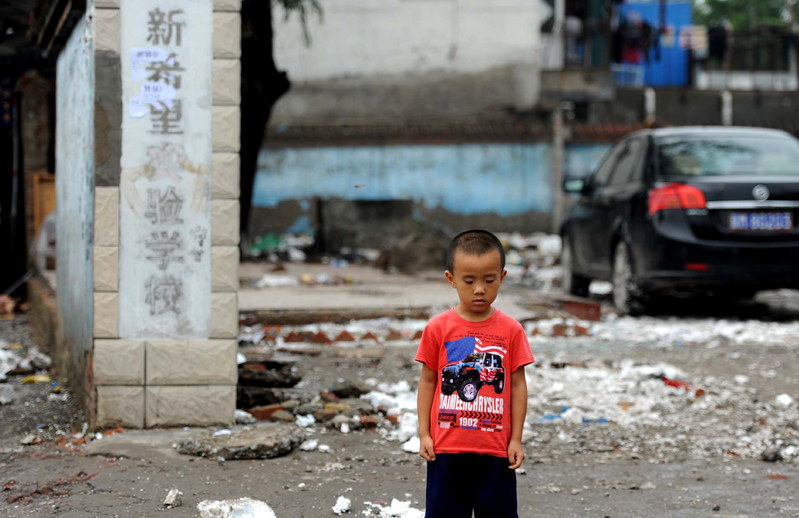
    北京有数以千计的民工子女无学可上,他们的学校被当局强行关闭。(AFP)

    世界媒体看中国:二等公民二等子女

     
    【大纪元2011年09月08日讯】(美国之音记者齐之丰报导) 世界各国的中小学新学年大都开始。北京有数以千计的民工子女无学可上,他们的学校被当局强行关闭。
    /* FillSlot(“DJYcn_articles_below-header”);*/

    为中国经济建设流血流汗的上亿民工成为中华人民共和国事实上的二等公民,他们的子女只能得到二等的教育机会。这种政府赞许或批准的歧视性政策(government-sanctioned
    discrimination)不但在中国国内,而且也在全世界引起纷纷议论。

    *学校与户口*

    法新社9月7日从北京发出报导说:“中国的学龄儿童(跟法国的儿童一样)已经开学,但北京几千名民工的孩子却无学可上。他们原先上的没有得到政府许可的学校突然被关闭。上个月,北京当局宣布关闭24所政府不承认的民工子弟学校。到了8月底,只有其中的5所得到暂缓关闭的待遇。”

    “根据中国错综复杂的种种居住权法律,大多数民工的居住登记依然是在他们的出生地,因此他们得不到可以在他们打工的地方正式居住的‘户口’。 没有一纸户口,民工的孩子就不能上当地的公立学校。因此,那些收费的常常是得不到政府认可的学校是民工子弟的唯一选择。”

    *当今中国二等公民*

    日本《新闻周刊》8月30日发表自由撰稿人Furumai Yoshiko(ふるまい よしこ)的文章,题目是“支撑都市的二等公民,民工及其子女。”

    文章说:“中国的学校9月开始新学年。本来现在是有孩子的人家准备孩子进入新学期的时候,北京郊区24所学校却得到强制关闭通知。约1万4000名学童无学可上,并成为新闻。这些学校被强行关闭,表面理由是它们得不到正式的开学许可证……它们的学生都是地方来的民工子女,所以,这些学校被称作‘民工子弟学校’。”

    在中国新学年开始之际,加拿大主要英文报纸多伦多《环球邮报》9月2日发表社论,标题是,“中国的民工是二等公民。”社论的副标题是“(民工)他们是推动中国经济增长的引擎,理应得到平等的社会服务,但他们没有得到。”

    社论说:“中国民工所得到的不平等待遇,是中国面临的一个最大的挑战,对中国所极端珍视的秩序和社会稳定构成破坏。”

    “最近北京关闭大约30所民工子弟学校只能让中国的民工阶层更加沮丧。官方为关闭那些学校提出的理由是那些学校是非法的,而且没有达到安全和卫生标准。很多家长对此表示异议。他们说,这些学校长期以来被准许存在,是因为他们的孩子没有别的学校可上。他们认为,至少是某些学校,地方当局拆毁那些学校,以便可以把学校土地卖给开发商。”

    “这只是中国20年来所纠结的一个问题的最新表现。农村居民大规模进入城市,两亿‘流动人口’是中国经济增长的发动机。他们建摩天大楼,建地铁,清理垃圾,为北京、上海、深圳和其他城市提供廉价劳动力。”

    “然而,按照复杂的户口登记制度,民工得不到城市居民的社会服务,其中包括医疗、住房和子女的公立教育。中国的民工在自己的国家被当作非公民。”

    “这种政府赞许的歧视必须改变。户口登记制度必须改革,中国的内部移民必须得到平等待遇,享有跟城市出生的人一样的权利。否则,中国将制造出一个永久性的下层阶级。”

    *让民工感觉不受欢迎*

    /* FillSlot(“DJYcn_articles_below-header”);*/

    英国《经济学人》杂志9月3日发表报导,题目是“北京的民工没有学校:让民工感觉不受欢迎的新途径”。

    在讲述了新学年即将开始之际,北京当局宣布关闭20多所民工子弟学校,招致学生家长、中国媒体和民工权利活动人士的强烈批评之后,《经济学人》的报导说:“在社会各界表示强烈批评和谴责之后,几所学校得到准许暂缓关闭。政府许诺让所有的其他学校的孩子都有学上。但这并没有减少人们对政府动机的质疑。北京的政府先前也试图关闭过民工子弟学校,但自2006年以来没有如此大规模关闭。”

    “中国的户口制度使民工很难得到城里人的教育和医疗服务。但中国城市经济依赖民工劳动力。一些中国城市在给民工孩子提供教育方面要比北京灵活得多。上海声言去年成为中国第一个城市为所有的民工子弟提供免费教育,在上海的民工子弟大部份是上公立学校,有一些则是上有政府津贴的民办学校。”

    *公开报导,依然敏感*

    中国的落后、不公平的户籍制度,以及随户籍制度而来的教育歧视,近年来在中国国内受到来自民间的强烈批评和抗议。这种不公平和歧视近年来也成为中国一些报纸的新闻报导和社论的主题。

    然而,尽管户籍制度和教育制度不公的问题时常在中国见报,但这些问题在中国依然属于所谓的“敏感问题”, 也就是说,是统管中国新闻出版的中国执政党共产党宣传部密切监视的问题。

    在新学年到来、北京市关闭几十所民工子弟学校成为中国国内外议论纷纷的话题之际,中国官方权威的通讯机构新华网摘要翻译发表美国《纽约时报》有关这个话题的一篇报导。

    新华网发表的《纽约时报》报导的翻译包括如下一些看似相当尖锐的文字:“ 一些观察人士认为,这场运动背后存在别的动机,包括政府为了补充财政而不断卖地的需求。红星学校的校址周围已经矗立起一幢幢价格昂贵的高层公寓楼和一个新的地铁站。”

    “但是在学校管理者、家长及许多北京市民看来,强拆学校无非是一种控制人口的做法。据统计,在北京的1960万居民中,有超过三分之一是来自中国内陆农村地区的民工。仅仅从2000年至今,北京的人口就增加了600万。”

    “初中以后的挑战会更加令人痛苦,届时民工子女要么回到父母的原籍上高中,从而与父母分居两地,要么辍学。倡导民工权益的人士说:‘这是一个残酷的、不公平的制度,它阻止人们追求自己的梦想。’”

    新华网的翻译省略了《纽约时报》报导的部份原文,这凸显出这个话题在中国的敏感。这些省略的文字包括:

    “(被强令关闭的)红星学校的校长谢女士说:‘政府对我们所作的事情是丧尽天良。’”

    “(仅仅从2000年至今,北京的人口就增加了600万。)这些数字让执政的共产党感到担忧。中共特别忌讳城市贫民窟,以及贫民窟可能成为社会动乱的温床。”

    (责任编辑: 高静)

     
    中港台时间: 2011-09-08 03:36:42 AM 【万年历】
    本文网址: http://cn.epochtimes.com/gb/11/9/8/n3366777.htm世界媒体看中国-二等公民二等子女
     

  • The Chinese Communists are not simply atheists

    The Chinese Communists are not simply atheists

    Font size: Decrease font Enlarge font
    image Mao’s temple in Beijing under police guards photo by Xiao Maoying

    When we often say that the Chinese Communist Party (CCP) is an atheist organization, we may only be half right. Why do I say that?  It is because the ultimate goal of the Communist atheism is to eradicate theism.  This means that they wish to manage the people’s faith in God and ultimately extinguish it.  We can see that it is definitely not a simple “atheism.”

    In China, the Communist Party claims that it is managing five major religions.  However, the atheistic  Chinese Communists do not even  have the concept of God, how can it study God’s religion, or manage it.

    If an ordinary significant atheist chooses to live a peace-loving and simple life, this pure form of atheism, in fact, is understandable.

    Yet it is not the case in China. Its aim of atheism is to manage other people’s faith in God, and it insists on doing so. Well then, behind the insistence, there must be some kind of confrontation with the corresponding object, otherwise, the Chinese Communists do not have the guts.

    Things in this world are corresponding. With the existence of God, there are demons; Buddhism exists and so do evil spirits; orthodox beliefs exist and so do cults. The Chinese Communists do not believe in God, do not worship Buddhism. Naturally there cannot be any factors of orthodox beliefs or orthodox churches.  In order to control the hearts of the believers in God, it forces people to follow and acknowledge the cult of the CCP rather than God.

    What people have lost under the rule of the CCP 

    After the CCP established its power, it started to persecute religions. Confucianism, Buddhism and Taoism were exterminated, orthodox believers were beheaded, the properties of the monasteries confiscated, monks and nuns were forced to return to secular life.  It then arranged its own spokesmen and created fake religions under the leadership of the party. Buddhist temples and churches were deserted. In their places were evil spirits attached to the communists.  The CCP became the leader of these religions. At this point, it pretended to allow people to worship. In fact, there is nothing to worship except the evil CCP.

    At the same time, people have been brainwashed into its party culture. On the whole, after several generations under the rule of the CCP, the party has basically achieved the goal of eradication of pure religions. The mainland has become the largest population base of atheism.

    The recovery of Chinese people’s original nature

    Chinese people cannot follow the orthodox forms of religion under the evil rule of the CCP. They have also lost the ability to think independently. The only thing left is the trace of their Buddha-nature.

    As people still have Buddha-nature, deities have mercy on them.   In these troubled times, the Great Buddha Law can save sentient beings.  It gives people an opportunity to escape from the clutches of the evil spirits.

    In fact, it is difficult for a human body to fight off evil spirits.  When a person actually thinks of returning to his original nature, there will be a strong earth-shattering power. Without this power, he is doomed to be swallowed up by the evil spirits.  With the return to his original nature, he will have the assistance of the divine power and be able to get rid of the control of the evil.

    Under the current situation, people can read the “Nine Commentaries”, quit from the Communist Party and listen to the truth, etc. All these actions will help them to inspire their original nature and lead them to a better future. Do not take these things lightly.  They are very precious.

    On the other hand, people who have been bewildered by superficial benefits and refused to quit the party will be the victims under the wicked rule of the CCP.  They will ultimately be deserted during the purification mechanism of the universe.  It is regrettable to see their miserable fates.

    There is an old saying “evil can never compete against justice”.  There is no way out by following the wicked CCP.

    Opinion articles represent the views of the author and not necessarily those of Secret China.

    http://en.kanzhongguo.com/opinion/3056.html


  • Protection or discrimination? Beijing’s new property prices curbing policy divide residents

    Protection or discrimination? Beijing’s new property prices curbing policy divide residents

    Posted on 18 February 2011 by Jing Gao | Comments 评论 (9)

    • tweetmeme_url = ‘http://www.ministryoftofu.com/2011/02/protection-or-discrimination-beijings-new-property-prices-curbing-policy-divide-residents/’;

    Beijing’s prohibitively high real estate prices have plagued the city’s dwellers for years. Wealthy speculators who buy several pieces of real estate for investment purpose are a major reason why the prices can’t cease soaring, which takes heavy toll on less well-off purchasers. Earlier this week, Beijing announced a new set of rules to thwart speculation with a heavy hand. Among them, “Beijing registered families that own one home can only buy one more, and those who have already owned two homes will not be allowed to buy any more. Non-Beijing registered families with no residence permit or not paying social security or income tax in the past 5 years will also be banned from the real estate market.”

    A Temporary Residence Permit issued by Beijing’s Public Security Bureau

    Shi Shusi, commentator at Caijing Magazine, questioned validity and legitimacy of the policy in Caijing’s official Sina microblog, “If you purely and utterly detest high property prices, you may savor the long-lost joy (from the policy). But sadly, the method by which to achieve the joy is discrimination, which is even more intolerable. Among the 17 million people living in Beijing, 5 million come from elsewhere who have no family register (in Beijing). Most of them are not speculators. Rather, they are constructors and contributors. But do they deserve discrimination for lack of hukou?”

    Most commenters side with Shi Shusi, the blogger, and adamantly denounce the policy for treating residents differently based on family register. However, some seemingly local Beijingers, namely those who were either born as a Beijing registered resident or have come to Beijing for many years and “naturalized” defend the policy that prioritizes Beijingers and blame newcomers of enchroaching upon their resources and land. It somehow evolved into a debate between Beijingers and non-Beijing residents.

    Family register, or hukou, is a system to control flow of population by implementing policies, for example, those regarding social security, health care and education opportunities, that favor “registered resident” from non-registered resident, or sometimes abruptly referred to as “outsiders.” As Beijing and Shanghai are the two most ideal places for migrant workers and have seen an explosion of population since China’s economic reform, a hukou is extremely hard to come by in these two cities. Until you get one, you are always a “temporary resident.”

    Some of the routes to obtaining one include, becoming a public servant or an employee of a state-owned enterprise and investing several hundreds of thousands of yuan. People joked that obtaining hukou in Shanghai and Beijing is even harder than getting a green card in the U.S., in the sense that you only need to be married to a U.S. citizen for two years to be eligible for a green card, but you have to stay married to a Beijing-hukou holder above the age of 45 for ten years to get Beijing hukou, whereas being a spouse of a Shanghai-hukou holder never guarantees you one, no matter for how long.

  • Photos: Hangzhou’s “Taxi bros” cabbies race with tough life

    Photos: Hangzhou’s “Taxi bros” cabbies race with tough life


    taxi01

    220 yuan ($34) per day as a commission demanded by the company in the form of operating charges and rent; 200 yuan ($31) on gas. So even before a “taxi bro” (a casual slang for cab driver) in Hangzhou hits the road early in the morning, he is already over 400 yuan ($65) in debt. While the consumer prices in Hangzhou take the lead in the entire nation, the taxi fares haven’t been adjusted accordingly a bit for the past five years. A taxi bro will have to work 12 hours a day full steam ahead in order to at least make ends meet. (Photos by Wang Zicheng 王子诚) (Read about taxi drivers going on strike in Hangzhou early last month)

    taxi02

    Hangzhou currently has altogether 8,496 taxi cabs, averaging out to be 33 for every 10,000 people. That drops to 13 per 10,000 if the 50 million tourists and visitors coming to Hangzhou every year are taken into account, which falls short of even one third of the national standard. Despite that the demand outstrips supply, the commission drawn by the company, the surging fuel cost and the low fares have conspired to make driving a cab anything but a plum job. An average cab driver makes 3,000 yuan ($465) per month. The picture shows on August 16, a young son ran out of the home and leans against the car to see his cab-driving father off.

    taxi03

    Among the 20,416 registered cab drivers in Hangzhou, about 15,000 of them hail from out of town. Their enclaves are located in Hangzhou’s fringe area. Ganchang Village in Hangzhou’s northeast is one of them. These enclaves attract cab drivers for their low rent and lack of traffic congestion. Living in close vicinity also translates to easier shift rotation. (Two cabbies alternate on two shifts per day.) At least 530 cabs drivers are living in the village of Ganchang. The picture shows homes of cab drivers in Ganchang. In order to keep expenses down, they choose to stay with their family in little rooms like rabbits in a warren.

    taxi04

    Electricity in Ganchang is priced for industrial users instead of residential users, at 1 yuan (15.5 U.S. cents) per kilowatt hour. Even though summer daytime temperatures in Hangzhou can soar into three digits Fahrenheit, many cabbies only turn on air conditioners for one or two hours at night during their sleep. After they return home from work, they gather on rooftops, bare-chested, for a chitchat or a whiff or two, and do not leave until it is time to hit the pillow.

    taxi05

    Although life is tough, many of them hang on and stay here, for their fellow townsmen are here, and they speak the same language and share weal and woe. Besides, compared with rents in downtown Hangzhou, rent here is really cheap, which is another enticement to stay.

    taxi06

    Mr, Zhang from central Henan province returns his home in Ganchang Village at 4 p.m. Soon after he put his belongings down, he went downstairs for some fresh cool air. Torn and worn tires are stacked in the corner of the staircase.

    taxi07

    At 4 a.m. on August 30, Mr. Li drove  the cab out of Ganchang and began his day shift. Each cab driver has to fork over a commission of 220 yuan for the day shift, or 160 yuan for the night shift per day, whether he works or not on that day. Gas costs about 200 yuan a day. He is 400 yuan in debt even before the tires begin to roll. Only after he makes 400 does he begin to put money into his own pocket.

    taxi08

    In June, 2011, China’s consumer price index rose to a 3-year-high, a 6.4 percent increase from a year earlier, mainly driven by a 14.4 percent surge in food prices. Ever skyrocketing cost of living and a taxi pricing system that has remained pretty much the same for five years have been squeezing cab drivers’ already narrow profit margin. The picture shows on August 30, as the rider arrived at her destination, Mr. Li gave her change and reminded her to take her belongings with her.

    taxi09

    Mr. Li had bought slices of pancake for three yuan as breakfast. However, he had no time to eat them up for the past two hours. The sedentary job and bad eating habits, including being late for or skipping meals, have turned cab drivers into victims of stomach diseases, prostate problems, chronic neck and back pain.

    taxi10

    The downtown Hangzhou has over 734,000 motor vehicles. But until the end of 2009, the total length of public roads within Hangzhou’s old city limits is only about 1,700 kilometers, or 1,060 miles. Road revamps and subway construction have only worsened the road traffic. Hangzhou is no less crowded and congested than Beijing. A cabbie may get stuck in traffic jams and make only 20 or 30 yuan an hour if he stays within the city’s downtown area. The picture shows Mr. Li tuned in to the local radio broadcaster for road traffic report, hoping to circumvent congested streets.

    taxi11

    At 12 p.m., Mr. Li went into a noodles restaurant after getting back from a trip to the suburbs. He gulped down the noodles in less than 15 minutes. Li says he usually skips lunch, as it is too much a waste of time.
    taxi12

    Before he finished his shift, he went to gas up the cab. The picture shows he stared at the reader. On this day, he drove 200 km, or 125 miles. That translates to 176 yuan for gas. No. 93 (equivalent of U.S. Regular) used to be a little more than 4 yuan per liter. Now it is 7.46 yuan per liter (roughly US$4.35 per gallon). (Read about souring oil prices that take a toll on Chinese car owners)

    taxi13

    At 5 p.m. on August 10, a cabbie who had just finished his day of work stood by his car and counted his money. After the fuel cost and the 220 yuan commission were deducted from his income, he only made about 40 yuan ($6) for the day. He bought a pack of cigaret, ate his breakfast. He would have to pay for his dinner, rent and utilities bills. He had earned just enough to make ends meet. Then there is oil subsidy from the government at the end of each quarter. Last quarter, the government doled out 4,995 yuan for each cab. Cabbies on day and night shift go 40-60 over that. So a day shift driver can get about 666 yuan as subsidy every month.

    taxi14

    During rush hours in the evening, grabbing a cab is like a fierce fight among citizens in Hangzhou. You have a better shot at it only if you have sharp eyes and quick sleight of hand. Some one said half-jokingly, “Anything about the city makes it look like a paradise. Only when hailing a taxi will you feel as if you were in hell.”

    taxi15

    The picture shows that on the evening of August 22, a family who had just finished their visit to the Broken Bridge were waiting to get in a taxi. The family were standing on both sides of the street and eyeing traffic in opposite directions. They spent more than 10 minutes in vain.

    taxi16

    Road-side food stalls have become cabbies’ rest area. Cabbies each have grown used to the flavor of a particular stall. They usually pull in at 11 p.m. for the “lunch” of their night shift. It’s 9 yuan for two veggies and two meat dishes. Business is slow at late night. Cabbies can be left in relative peace while having their meals.

    taxi17

    It was later than midnight. The driver was changing tires himself. He said because it was night time, there wouldn’t be a service area for taxi cabs, let alone an inexpensive auto repair. He could only depend on himself to fix the problem.

    taxi18

    On August 10, Mr. Jin, who has been in Hangzhou for more than a year, was shown holding a bill in his hand. Several days ago, Mr. Jin hit an electric bike rider. After making sure the rider did not sustain any major injury, Mr. Jin paid him 1,000 yuan nonetheless as compensation. Mr. Jin said his monthly income had gone down the drain.

    taxi19

    The bulletin board in Ganchang Village is plastered with advertisements and posters looking for cab drivers. According to limited statistics, at least 400 cab drivers in Hangzhou quit the job since January. Every day, about 200 taxi cabs are left idle because of having no driver. The local traffic radio joked that it is harder to find a driver for the night shift than to win the lottery.

    taxi20

    The average monthly income of wage Hangzhou’s wage earners in 2010 is 4,064 yuan ($615), way above the 3,000 yuan that a cab driver makes. By contrast, cab driver has to work under great stress 12 hours a day. The picture shows a cabbie smoking on the rooftop of a building in Ganchang.

    taxi21

    Mr. Zhang from Henan province had vacated his fridge. Meager income and high electricity prices are the reason why many cab drivers living in Ganchang have put their fridges and washers out of use. Mr. Zhang will leave Hangzhou by the end of the year. He has packed up the home appliances and some personal possessions in order to mail them home in packages next month.

    taxi22

    Some non-local cab drivers have chosen to leave Hangzhou for neighboring cities where cost of living is lower or to become truckers. The majority who stay are pinning their hope on the public hearing on taxi fares held by Hangzhou’s Bureau of Commodity Price on September 9.

    http://www.ministryoftofu.com/2011/09/photos-hangzhous-taxi-bros-cabbies-race-with-tough-life/
     

  • Photos: China’s college grads in ‘ant tribes’ pursue dreams

    Photos: China’s college grads in ‘ant tribes’ pursue dreams

    You can always meet such people: they came to an alien land all by themselves, sleep on cheap bunks, send bunches of application letters and try out new jobs, call their families and whine over the phone, and then assure them, “I can get it done.” In that case, they are very likely to belong to an ‘ant tribe.’

    “Ant tribe” was coined several years ago to describe the millions of Chinese college grads who, unable to afford high rents, crowd together in slums in major cities and scrape by on meager salaries. They have stepped off campus. Their careers are not yet onto the right track. Their future seems so uncertain and undecided.

    Most “ant nests” are very ill-equipped, providing simply bunk beds and a water sink. It would be a “high-end” ant nest if it has internet access and a shower. Most apartments have four to six rooms, each packed with several bunk beds. As a result, the rent is very cheap, ranging from 100 to 300 yuan (US$15 to 46) per month in the city of Shenyang in China’s northeast. Low rent is the biggest enticement to ‘ant tribes.’ However, their biggest concern is if people in the same room are on the same page and can get along. After all, an ant tribe is unlike a college; you need much longer time to get to know one another. On the other hand, ants seem to be kindred spirits. They are in similar circumstances and strive for the same ideal – being able to move out of the ant nests one day.

    Leaf is now an intern at an real estate selling company in Shenyang. She waits to be offered a full-time position after graduation. Every day, she is the first in her ant nest to rise and leave. Her job is to promote the sales of real estate to customers of all kinds. After she returns to her nest, she has to go through her thesis and prepare for the defense next month.

    Moon is Leaf’s classmate. She is right now a trainee at a cosmetics company. She is required to memorize things printed on a thick stack of documents within days of training, and will be relocated to a remote and unfamiliar city for a month the first week after her official entry.

    Huan Huan majors in animation. She is crazy about photography, and works as an assistant in a photo studio specializing in children’s portraits. She has been shooting photos on her own ever since half a month after her internship started. She works extensively with kids and has a lot of anecdotes and fun facts to tell at night in the ‘ant nest.’

    Little Huan is Huan Huan’s friend. They two happen to share in their names the same Chinese character for “joy.” Little Huan is a shop assistant at a department store. She is always the last one to return. After she gets home, she goes to bed soon after washing and seldom engages herself into conversation with girls in the room.

    anttribe01

    Due to different work hours, while some are soundly asleep, others have got ready to go.

    anttribe02

    With a busy life, snoozing for a little longer would be an extravagant wish.

    anttribe03

    Leaf is the earliest bird. Her hairdryer is also admittedly an alarm clock for everyone else.

    anttribe04

    Ready to go.

    anttribe05

    Huan Huan and Moon get up subsequently to embrace their new day.

    anttribe06

    When everyone else is still busy around, Leaf is leaving. “Today I gotta sell an apartment out” is her goal.

    anttribe07

    The amenities in the room, if any, are very simple. The bed and the walls are covered with adhesive hooks. Hangers also line the bedstead.

    anttribe08

    Socks that girls air to dry.

    anttribe09

    Hot water that girls use is supplied by an immersion heater that Leaf has bought.

    anttribe10

    A homemade hanger.

    anttribe11

    Moon has just been enrolled in training classes offered by her new employer. She has to remember the reference materials by heart, so she reviews those materials every day after work.

    anttribe12

    Huan Huan gets home from work quite early. She sometimes makes do with instant noodles for dinner in the room.

    anttribe13

    Leaf devotes most of her spare time to her thesis as the date for defense draws near.

    anttribe14

    Moon reviews her materials.

    anttribe15

    Huan Huan gets home when it is quite late. Girls are going to bed soon.

    anttribe16

    In the spare time, girls gather together. It must be when the American TV shows they’ve been following closely are updated online.

    anttribe17

    anttribe18

    Everyone talking at night about what they have seen and heard during the day is the jolliest moment of the entire day. The glow emitted by Huan Huan’s lamp makes the little room cozy.

    anttribe19

    Huan Huan applies moisturizer to her face before going to sleep.

    anttribe20

    Leaf is about to wave goodbye to this day.

    anttribe21

    One day has passed, and another day is coming.

    anttribe22

    Huan Huan works at a children’s photography studio and meets many adorable children. She has the best to offer as bedtime stories.

    anttribe23

    Leaf works at a real estate company. She sold two units in less than a month.

    anttribe24

    Little Huan works at a department store. She is the last one to get home.

    anttribe25

    Moon is a trainee at a cosmetics company. She makes the most money among the four girls.

    No one knows how much longer such life would last, and everyone is thinking about escape, about when their jobs are safe within their grasps, when they can afford to move into an apartment and share it with no one else, and when they no longer have to be on the go like this…

    Best wishes to those young people who are still endeavoring.

    http://www.ministryoftofu.com/2011/08/photos-chinas-college-grads-in-ant-tribes-pursue-dreams/


  • 大陆“砖家”鉴定古董向“

    大陆“砖家”鉴定古董向“钱”看

     
    【大纪元2011年09月08日讯】(大纪元记者韩婕综合报导)中共制下的假、大、空最近发挥到极致,五位大陆顶尖古董鉴定专家,收取佣金将一位富豪订制的“金缕玉衣”估为价值24亿人民币(3.8亿美元)的鉴定报告,如今更让“中国砖家”国际露脸。
    CreateDomIframe(“google_ads_div_DJYwww_articles_news_below-header_ad_container” ,”DJYwww_articles_news_below-header”);
  • HK News Executive Resigns over Jiang Zemin’s Death Report

    Uploaded by on Sep 7, 2011

    For more news visit ☛ http://english.ntdtv.com
    Follow us on Twitter ☛ http://twitter.com/NTDTelevision
    Add us on Facebook ☛ http://facebook.com/NTDTelevision

    Two senior news executives at Hong Kong’s Asia Television, or ATV, have resigned over the wrongful report on the death of former Chinese regime leader Jiang Zemin on July 6th. ATV said on Tuesday it had accepted Senior Vice President of News and Public Affairs Leung Ka-wing’s resignation, effective immediately. Leung’s deputy also resigned.

    ATV reported Jiang died after he was missing from events marking the 90th anniversary of the Chinese Communist Party on July 1st. China’s state-run Xinhua News Agency refuted the report as “pure rumor.” Leung told ATV that he’s taking responsibility for the report, because he could not stop it from being aired.

    Jiang Zemin rose to power after the 1989 Tiananmen Square massacre. Jiang is infamous for several unpopular decisions, such as having signed away half a million square miles of Chinese land to Russia and for having started the persecution of the Falun Gong spiritual movement in 1999 that is still going on today.


  • China’s Microblogs Receive Unfriendly Attention From Regime

    China’s Microblogs Receive Unfriendly Attention From Regime

    By Cheryl Chen
    Epoch Times Staff
    Created: Sep 6, 2011 Last Updated: Sep 6, 2011
    Print | E-mail to a friend | Give feedback
    Related articles: China > Regime

    While microblogs may look to the Chinese people to be a vital new source of information, they often appear to the Chinese regime to be a source of what it calls “Toxic Internet rumors.”(Screenshot from Weibo.com)
    Within moments of two high-speed trains colliding in Wenzhou City, China, on July 23, users of the Twitter-like service Sina Weibo told about train cars derailed, the violence of the impact, and casualties. In the days that followed, microblogs on Sina Weibo provided relentless and often revealing commentary on the causes of the crash.

    The Chinese regime would have preferred that such reporting and commentary be silenced, as it sought to suppress information about the crash, even going so far as to bury traincars that had derailed rather than allow them to be inspected.While microblogs may look to the Chinese people to be a vital new source of information, they often appear to the Chinese regime to be a source of what it calls “toxic Internet rumors.”

    The regime recently announced its intention to eradicate such “rumors,” and on Sept. 2, the overseas edition of the state-run People’s Daily published a long commentary stressing the importance of increasing Internet control.

    Last week, Sina Weibo sent out notices to its 200 million users saying that two reports posted on its websites were false. The move has drawn strong criticism from netizens that see it as part of the regime’s new campaign to control microblogs.

    Beifeng, a famous Chinese blogger, social activist, and former journalist, has charged the regime is carrying out a campaign of disinformation to discredit him. He published an open letter on Aug. 27 disclosing that his Sina account “@Wenyunchao” was suspended because he called for an investigation to identify the victims of the July 23 train crash in Wenzhou.

    Recently, another @Wenyunchao account appeared on the Sina microblog with his photo but Beifeng says he did not post the messages. “The intent of planting and framing is very obvious,” he said, via Radio France Internationale.

    Beifeng also told Deutsche Welle that there are indications that the regime has identified microblogs that have created difficulties for them because they influence public opinion. To control such unwanted information, nothing is more convenient than labeling it as “rumor,” Beifeng says.

    According to New Tang Dynasty TV’s commentator Wen Zhao, microblogging has weakened the regime’s power to control the Chinese people.

    The Chinese regime has been able to control public opinion effectively by maintaining full and tight control of traditional media. With a rigid organizational system, which includes layer upon layer of administration, the regime has been able to prevent people from assembling and organizing.

    Microblogging, Wen observes, has turned news publishing into a grass-roots movement that doesn’t rely on main media resources that are under the Party’s control, or on traditional organizations to mobilize people to action.

    Pu Fei, a long time human rights activist told Radio Free Asia, “The development of new media has played a very important role in China’s human rights movements and citizen movements, as well as social transformations.” He is hoping that the authorities will take heed of the roles played by the new media, instead of suppressing them in the usual manner.

    China’s most popular blogger/writer Han Han, however, was not very hopeful. In an article that was removed by the authorities, he jokingly made some bold predictions in January 2010 about the regime’s measures to control the Internet:

    “2015: The authorities shut down the Internet completely and introduce computers dedicated to Internet access, which are the only portal for accessing the Internet.

    “2016: The Chinese netizen population drops to 1 million. All websites will lead to a single website no matter what URL you type. This single website updates itself based on People’s Daily.” People’s Daily is the mouthpiece of the Chinese Communist Party.

    But according to Wen, the Internet is like an information highway and the regime’s dependence on that highway makes its disabling all microblogs in the near future unlikely.

    “When an emergency arises, the authorities can block a section of a highway for a short time, but not permanently, as it could lead to economic collapse,” Wen said. “Nowadays the Internet has become a part of world economic activity, which the regime wants to take part in. It therefore is unlikely to do whatever it wants to the Internet.”

    According to Wen, the regime wants simultaneously to enjoy the enormous commercial opportunities enabled by the Internet, while at the same time maintaining strict information censorship.

    “However, with the two contradicting each other, the Chinese regime is holding a tiger by the tail. If the regime cannot solve this problem successfully, it might lead to its own demise,” he said.

    Chinareports@epochtimes.com

    http://www.theepochtimes.com/n2/china-news/chinas-microblogs-receive-unfriendly-attention-from-regime-61250.html